
Abdominal Liposuction in Berlin
Many people desire a slim and firm abdomen - women as well as men. However, stored fat on the abdomen often cannot be easily controlled. Not only dietary sins and lack of exercise, but also hormonal and genetic factors play a role in its development. Once present, fat deposits on the abdomen often prove to be very persistent despite a sustainable change in diet and intensive sports programs. Abdominal liposuction can permanently eliminate unwanted curves. Patients who have decided on abdominal liposuction often feel not only physically but also psychologically better after the procedure, as their external appearance optimally matches their zest for life again.
- Duration of the procedure
- Abdominal liposuction can take 1.5 to 2 hours, depending on the findings and the liposuction method.
- Anesthesia
- Local anesthesia and twilight sleep or - in rare cases - general anesthesia
- Clinic stay
- Outpatient or with a 24-hour inpatient stay
- Socially presentable
- After one to two days
- Able to work
- For non-physical work after two to three days, for physical work after seven to fourteen days
- Sport
- After six weeks at the earliest
- Wound healing
- Approx. 14 days
- Costs
- Depending on findings and extent of abdominal liposuction from 2,500 Euros
- Aftercare
- Wear compression garments for about four weeks to optimize the result of the liposuction, regular follow-up appointments at the practice
Book an initial consultation for abdominal liposuction in Berlin. During abdominal liposuction, fatty tissue is removed from various abdominal areas (upper or lower abdomen) by suction. Depending on body shape, fat may also be removed from the hips and back. If the skin is sagging, a tummy tuck may also be performed. Procedure for abdominal liposuction in Berlin. The principle of abdominal liposuction is always the same, regardless of the surgical method used: During liposuction, the fatty tissue located under the skin is selectively loosened and suctioned off with fine cannulas. For localized fat deposits on the abdomen and waist, the procedure can be controlled very precisely, allowing for aesthetically optimal results. Depending on the individually chosen treatment method, the procedure is performed under twilight sleep or general anesthesia.
Liposuction is considered a low-risk operation. As with any other surgical procedure, liposuction can lead to bruising, bleeding, wound healing disorders, or medication intolerances. However, by choosing an experienced plastic surgeon, such risks can be reduced to a minimum. The tumescent technique also contributes to the low risks of this procedure. Worldwide studies show that risks in liposuction primarily arise when too much fat is removed or when several unrelated operations are performed on the same day. If the removal of larger amounts of fatty tissue (more than three liters) is necessary, the procedures should be staggered and performed several weeks apart. After liposuction, touch sensitivity or numbness at the surgical site may occur for several weeks. Rare complications also include thrombosis, embolisms, or circulatory failure. To avoid complications, no blood-thinning medications should be taken one week before liposuction. It is advisable to reduce or completely avoid alcohol and nicotine consumption during this time and for the first 14 days after liposuction.
After abdominal liposuction, compression garments should be worn continuously for about four weeks - day and night. This is to prevent the cavities created by the liposuction from filling with blood, dissolved fat cells, or tissue fluid. This could lead to the formation of knots or scars, which would significantly affect the aesthetic result of the liposuction. Immediately after liposuction, there may be slight pain. Swelling and bruising are also normal. Swelling subsides over several months. Regular cooling can support the healing process. In the first week after the procedure, a slight weight gain may occur due to the accumulation of lymphatic fluid in the treated body regions. Showering is allowed for the first time two or three days after liposuction. Full baths and sauna visits are only possible again four weeks after abdominal liposuction. To avoid complications, no blood-thinning medications should be taken one week before liposuction. It is advisable to reduce or completely avoid alcohol and nicotine consumption during this time and for the first 14 days after liposuction.
Achieve a slim, toned body shape with abdominal liposuction in Berlin
With abdominal liposuction, women and men regain a slim and toned body shape. Through the procedure, they almost always benefit not only physically, but also through increased well-being, greater self-confidence psychologically, and thus achieve a higher quality of life overall. Which liposuction method is optimally suited is discussed with each patient individually in a consultation. Criteria for this are the personal findings and the extent to which the liposuction should be performed.
What results can be achieved with abdominal liposuction?
The effects of abdominal liposuction are visible within the first few days after the procedure. As bruising and swelling subside, the visual result continuously improves over four to six weeks after liposuction. The final result is usually visible after six to fifteen weeks – however, in individual cases, it can take six to nine months. It is very likely that shopping for new clothes will be on the agenda a few weeks after the procedure – usually one to two dress sizes smaller than before the liposuction.
The limits of abdominal liposuction are, on the one hand, that the subcutaneous fatty tissue must be preserved to a certain extent to achieve a natural-looking result. On the other hand, only a limited amount of fat can be removed during a single procedure. For very extensive areas for liposuction, it takes correspondingly longer to achieve the desired result through repeated procedures.
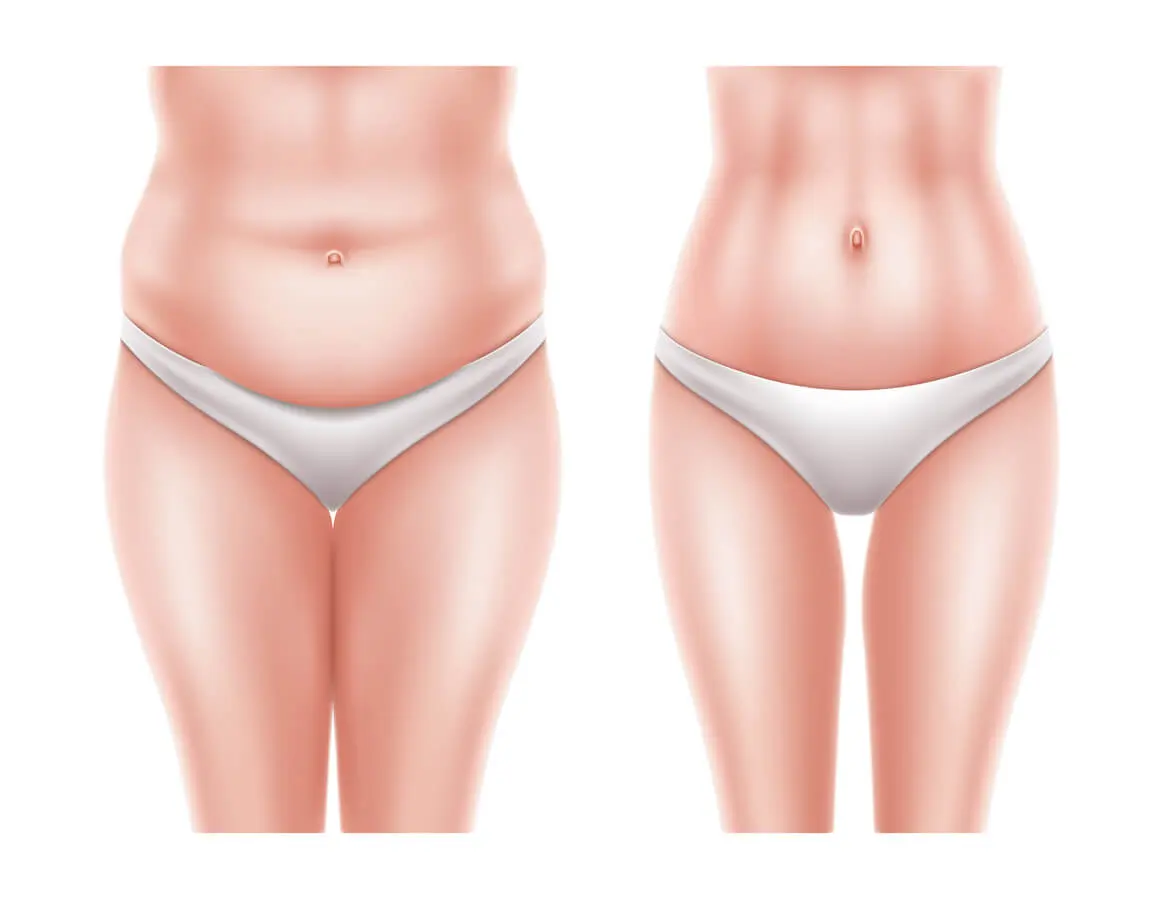
How long do the results of abdominal liposuction last?
Since the fat cells are suctioned off during liposuction, the result is permanent. Already suctioned fatty tissue does not grow back in the treated areas – thus, the result of abdominal liposuction lasts a lifetime. To achieve maximum success, it is advisable to maintain weight after the operation to avoid fat deposits in other areas of the body.
Where on the abdomen are incisions necessary?
Incisions for the introduction of the cannulas for liposuction are made directly in the areas where the excess fatty tissue is located. After the procedure, they are sutured. If necessary, the stitches can be removed about one week after abdominal liposuction. During the healing process, fine scars may form in these areas, but these usually fade quickly and are no longer visible a few weeks or months after liposuction.
Abdominal liposuction in Berlin – detailed consultation, individual aftercare
The first step to abdominal liposuction is a detailed consultation at our practice in Berlin, during which, as your specialist in plastic and aesthetic surgery, I want to understand the wishes of our patients. Of course, during this consultation, the possibilities and limitations of the desired procedure will also be discussed. The anamnesis and consultation are followed by a comprehensive physical examination, a recommendation for the individually optimal liposuction procedure, and the creation of a personal treatment plan. Before the procedure, all questions regarding the course of the liposuction, possible risks, and aftercare will also be clarified in a personal discussion. Even during the healing process, my practice team and I are available for individual consultations and treatments.
The different procedures and the process
The specific course of an abdominal liposuction depends on the method used. Various procedures are available to the plastic surgeon for liposuction:
Vibration technique with tumescent anesthesia
Most commonly, a minimally invasive vibration liposuction in conjunction with local tumescent anesthesia is used for abdominal liposuction. In such a liposuction, the suction cannula is connected to an electric motor that gently vibrates the cannula at around 5,000 revolutions per minute. Before the start of the liposuction, a sterile saline solution enriched with a local anesthetic and other medications is injected under the skin of the abdominal region to be treated. This procedure is called tumescent anesthesia. The fluid helps detach the storage fat in the abdomen from the connective tissue overlying the fat layer. This simultaneously reduces the risk of injuries and bruises. Subsequently, the compact fatty tissue and subcutaneous fatty tissue are reduced through liposuction. The vibration technique with tumescent anesthesia is a very gentle procedure for abdominal liposuction; connective tissue, nerves, and blood vessels remain unharmed.
The fluid amounts for detaching body fat in the abdomen are dimensioned differently: When using the classic tumescent procedure, the fat cells are flooded with three times the amount of solution. In the super-wet technique, the fluid volume is approximately equal to the volume of fat to be removed by the procedure. The term "tumescence" means "swelling" and refers to the swelling caused by the fluid in the region of the procedure.
Water-jet technique
When using the water-jet technique for liposuction, fat cells are detached from the surrounding tissue by a high-pressure water jet and then aspirated. Local anesthesia is also performed using the tumescent procedure. This procedure is particularly used for the reuse of fat (autologous fat transplantation or so-called lipofilling).
Ultrasound technique
When using ultrasound technology for liposuction, excess fatty tissue is liquefied by ultrasound and then aspirated via a cannula.
Laser lipolysis
Laser lipolysis is not a classic liposuction. Rather, excess body fat in the abdomen is dissolved by a high-energy laser beam and then aspirated.
Frequently asked questions
General anesthesia is rarely required for liposuction. It is usually performed at the request of individual patients. Surgical pain is reliably eliminated by local anesthesia. The administration of a sedative supports psychological relaxation before and during the procedure.
If there are no particular personal risks or complications during the procedure, outpatient liposuction is easily possible. Patients remain in the practice for some time for observation even after an outpatient procedure. Important: After outpatient liposuction, you should not drive a car yourself for a few days. An inpatient stay is necessary after larger procedures or aspirations or in the presence of pre-existing conditions.
The treatment result of abdominal liposuction is permanent. The procedure completely removes fat cells in the treated areas, so no new fat deposits can form there. However, it is still important to maintain weight after liposuction, as fat accumulation in other areas can unfavorably alter body proportions.
Yes and no. Of course, the removed fat cells no longer count as overweight. Nevertheless, abdominal liposuction is exclusively an aesthetically oriented procedure. For sustainable weight reduction or maintaining current weight, a change in lifestyle is required.
To achieve an excellent overall result, aftercare after abdominal liposuction is crucial. This includes, in particular, rest and wearing compression garments or compression bandages in the first few days to four weeks after the procedure.
Contraindications to abdominal liposuction can be severe overweight, pronounced skin excess, certain pre-existing conditions, and the mandatory intake of certain medications. The decision should be made by the doctor.
Do you have any further questions about abdominal liposuction?

Do you have questions about abdominal liposuction?
Should you still have any unanswered questions, we would be happy to discuss them personally and without obligation at our Berlin practice.