
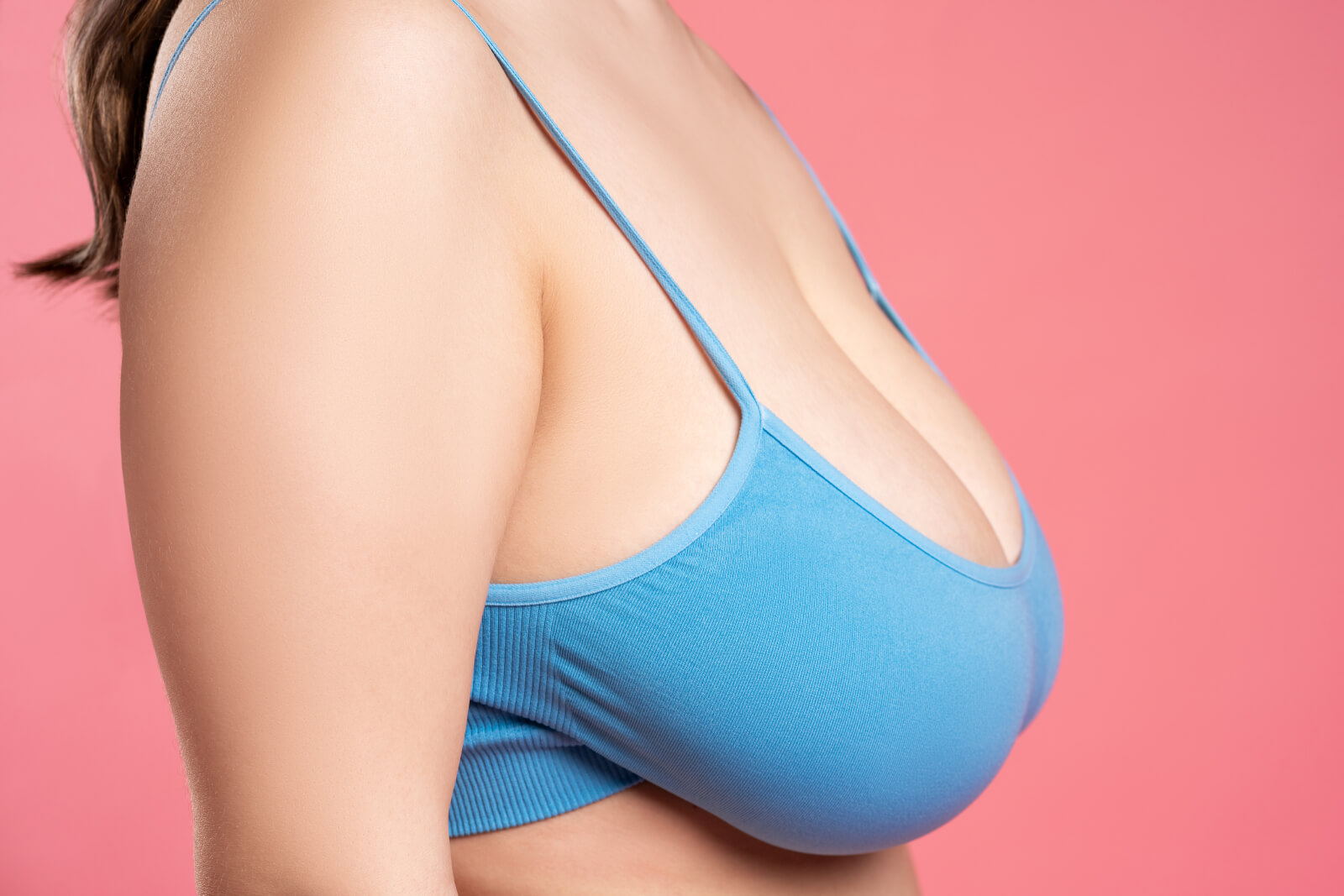
Breast Reduction in Berlin – Your Specialist in the Capital
When people think of plastic and aesthetic breast surgery, breast augmentation is often the first procedure that comes to mind. Many women would like fuller breasts that complement their overall body proportions. Breast augmentation is one of the most frequently performed cosmetic procedures worldwide, including in Germany. However, very large breasts can also cause considerable physical and emotional strain.
Breast reduction can help women feel more comfortable in their bodies. During surgery, excess skin, fatty tissue and breast tissue are removed. The procedure may also include a breast lift and reduction of the areolae. The aim is to create smaller, lighter and firmer breasts.
At my specialist practice for plastic and aesthetic surgery, I use a range of surgical techniques for breast reduction, selecting the most appropriate method according to each patient’s individual anatomy. Within the limits of what is medically advisable, I tailor the procedure to your personal wishes. My aim is to achieve an aesthetically balanced, long-lasting result that allows you to feel more comfortable and confident in your body.
Are you looking for a breast reduction specialist in Berlin who can help you regain confidence in your body? Please contact my practice to arrange a personal consultation.
- Procedure duration
- Between two and four hours, depending on the technique and extent of surgery
- Anaesthesia
- General anaesthesia
- Hospital stay
- One night
- Return to social activities
- After one to two weeks
- Return to work
- After one week at the earliest; up to two weeks for physically demanding work
- Exercise
- After four to six weeks
- Wound healing
- Two to three weeks; non-dissolvable sutures are removed once the wounds have healed
- Cost
- Depending on the extent of surgery, from €7,000
- Aftercare
- Compression dressing for the first few days after surgery, a sports bra for four weeks, scar care and regular follow-up appointments at my Berlin practice during the first few weeks after breast reduction
Breast reduction at my Berlin practice begins with one or more consultations to prepare you for surgery. You should not take blood-thinning medication during the week before your operation unless this has been agreed with your doctor. You should also avoid alcohol and nicotine during this period, or reduce your consumption as much as possible. Following a final discussion immediately before surgery, I mark the planned incisions on your breasts with a surgical skin marker. You will then be placed under general anaesthesia by an experienced anaesthetist, who will monitor you continuously throughout the operation. The precise course of the breast reduction depends on the extent of surgery and the technique used. I close the wounds with fine sutures beneath the skin. Depending on the material, these will either dissolve naturally or be removed as an outpatient after two to three weeks. Drains help remove wound fluid and usually remain in place for one or two days. Immediately after surgery, a firm dressing supports the breasts; this is subsequently replaced with a medical support bra or sports bra. You can usually leave the clinic after one night.
Like any surgical procedure, breast reduction involves certain risks. These include post-operative bleeding, infection and delayed wound healing. Overall, however, breast reduction is generally considered a procedure with a low complication rate when performed under appropriate conditions. During your personal consultation, I will assess any individual risks associated with pre-existing conditions or medication. As an experienced specialist in plastic and aesthetic surgery, I take meticulous precautions to reduce surgical risks, although complications can never be ruled out entirely. You also play an important part by following my instructions for preparing for surgery and completing the necessary aftercare.
During the first few days after breast reduction, your breasts may feel tight and sore. Appropriate pain relief can help manage these symptoms. Swelling and bruising usually subside steadily. Once the dressings have been removed, you will need to wear a support bra day and night for four weeks. You can usually shower within two to three days of surgery. Saunas and baths should be avoided for approximately two months. For at least four weeks, you should refrain from strenuous physical work and exercise, including forceful or sudden movements of the upper arms. During this period, you should also sleep on your back wherever possible. Nipple sensitivity is often temporarily reduced after breast reduction and may take several months to recover. Once the initial wounds have healed, massage and appropriate skin and scar care can support the continuing healing process. Avoid sunbathing for around six months to reduce the risk of scar pigmentation. During the first few weeks after your breast reduction, I will see you for several individually scheduled follow-up appointments at my Berlin practice.
Breast Reduction in Berlin – Greater Comfort and Confidence
There are various reasons for considering breast reduction, medically known as reduction mammoplasty. Excessively large breasts often cause physical discomfort and can place considerable strain on the spine. Muscular tension and poor posture may lead to persistent pain. Some women unconsciously adopt a forward-leaning posture to conceal breasts they feel are too large, potentially contributing to long-term postural problems and degenerative changes in the spine. Women with very large breasts may, for example, face an increased risk of a slipped disc.
Skin irritation beneath the breasts is another common problem and can encourage inflammation or infection. Large breasts may also begin to sag at a relatively young age. They can restrict everyday activities, particularly sport and physically demanding tasks. The emotional impact is equally important and, for many women, is the main reason for seeking breast reduction. They may feel stared at or reduced to their body shape, adversely affecting their body image, self-confidence and, in some cases, intimate relationships.
Breast reduction can provide long-term relief from many of these concerns. Women who choose the procedure often experience improved physical comfort, body confidence and emotional health. Breast reductions are performed not only for aesthetic reasons but also where there is a medical indication. In such cases, health insurance may cover some or all of the cost, subject to the insurer’s assessment.
Breast reduction can be performed at any adult age, provided physical growth is complete and the breasts are fully developed. The procedure should be carried out only by an appropriately qualified specialist in plastic and aesthetic surgery with extensive experience in breast surgery. Originally from Italy and based in Berlin for many years, I am proud to run my own practice in the capital and to provide my patients with careful, professional treatment and natural-looking results.
What Results Can Breast Reduction Achieve?
Breast reduction aims to create smaller, lifted and firmer breasts. The degree of reduction depends on the patient’s individual anatomy and desired outcome. You will gain an initial impression of the result immediately after surgery, although swelling and healing will continue to influence the appearance. The final result is generally visible within six months, once the healing process is largely complete.
The results of breast reduction can last for ten years or longer, and many patients enjoy their outcome for considerably more time. Surgery cannot, however, stop the natural ageing process. Future pregnancies may also alter the size and shape of the breasts, as the skin and glandular tissue can become looser. Further surgery is possible if required, with a breast lift often being the principal consideration.

Surgical Techniques and Incisions for Breast Reduction
Breast reduction is a substantial surgical procedure performed under general anaesthesia. Depending on the extent of the reduction and the technique used, it takes approximately two to four hours. Excess fatty tissue, glandular breast tissue and, in most cases, skin are removed from the lower part of the breasts. I then use the upper portion of the glandular tissue to create a new breast contour. The nipples are generally repositioned together with their nerves and blood vessels, helping to preserve sensation and, where future pregnancy is planned, the ability to breastfeed. The nipples and areolae may also be reduced during surgery.
Several breast reduction techniques are available, differing primarily in the position and length of the incisions. The most suitable incision pattern depends on the patient’s anatomy and her preferences regarding breast size and shape. Wherever appropriate, I aim to minimise the number and length of incisions to limit scarring. Breast reduction may sometimes be combined with breast augmentation, particularly when additional volume is desired in the upper breast or décolletage. Augmentation can be performed using breast implants or the patient’s own fat through lipofilling.
Lejour technique (vertical or lollipop technique)
The Lejour technique allows breast reduction to be performed with comparatively limited incisions. It is particularly suitable when the breasts also require lifting. The incision runs around the areola and then vertically down to the inframammary fold. The skin is tightened along the vertical incision, and excess skin is removed where necessary. If only a relatively small amount of breast tissue needs to be removed, an incision around the areola alone may sometimes achieve a satisfactory result.
Inverted-T technique (Strömbeck technique) and L technique
The inverted-T technique is used primarily for very large and/or markedly sagging breasts. In addition to the incisions used for the Lejour technique, a horizontal incision is made along the inframammary fold beneath the vertical incision. This allows more tissue to be removed and facilitates more extensive reshaping. The nipples are repositioned whilst preserving their blood and nerve supply wherever possible. If a very large volume of tissue must be removed, free nipple grafting may occasionally be necessary. This involves separating the nipples from their original blood vessels and nerves, which can reduce sensation. The ability to breastfeed is not preserved with this form of breast reduction. I use this technique only rarely, when another method is unlikely to provide an appropriate result.
The L technique is a variation of the inverted-T incision. The incision in the inframammary fold extends in only one direction, towards the outside of the breast. Depending on the breast anatomy, an L-shaped incision can also be combined with a shorter inverted-T incision.
Hall-Findlay technique
The Hall-Findlay technique is suitable for a wide range of breast sizes and shapes. Rather than using free nipple grafting, the nipple is repositioned on a pedicle consisting of glandular and fatty tissue. Because the blood vessels and nerves remain connected, this approach helps preserve nipple sensation and the ability to breastfeed. The incision runs around the areola, and tissue is removed from the area from which the pedicle has been formed. Like the Lejour technique, this method can limit scarring whilst allowing effective reduction and reshaping of the breasts.

Breast Reduction in Berlin – Detailed Advice and Personalised Aftercare
Like any form of breast surgery, breast reduction is a sensitive and deeply personal subject for my patients. The procedure requires a high degree of trust in the treating surgeon. At my specialist practice for plastic and aesthetic surgery in Berlin, I therefore place great importance on providing personal, attentive care in a calm setting throughout your treatment.
The first step towards breast reduction at my practice is a detailed consultation. During this appointment, I take time to understand your expectations, wishes and personal reasons for considering surgery. Following a thorough medical history and physical examination, I recommend an appropriate surgical technique and prepare a personalised treatment plan. I will also explain the limitations and potential risks of the procedure clearly and honestly.
Immediately before your breast reduction, I will review the surgical process and aftercare with you once more. I also remain available to answer questions and provide medical support in the days before surgery and throughout your recovery.
I developed a particular focus on breast surgery during my medical studies and specialist training. In my work as a plastic and aesthetic surgeon, medical standards and aesthetic judgement are inseparable. My aim is for you to feel more comfortable and confident in your body following surgery. Contact my Berlin practice to arrange a personal consultation about breast reduction.
Frequently Asked Questions
When Will Health Insurance Cover the Cost of Breast Reduction?
Unlike other plastic and aesthetic breast procedures, such as breast augmentation, breast reduction may be partially or fully covered by health insurance where there is a recognised medical indication. This may apply when large breasts can be shown to cause significant physical symptoms. Many insurers base their assessment partly on whether at least 500 grams of tissue will be removed from each breast. Applications may also be approved in cases involving postural damage, slipped discs, significant breast malformation or pronounced asymmetry. Psychological distress alone is generally not sufficient for the cost to be covered. The final decision always rests with the individual health insurance provider.
When Should Breast Reduction Be Performed After Pregnancy?
Breast reduction after pregnancy should be postponed until the associated physical changes have fully settled. If you are breastfeeding, the procedure should generally take place no earlier than six months after you stop, as the breasts need time to return to a stable size and shape. Ideally, breast reduction should be planned after you have completed your family, as surgery may affect your ability to breastfeed.
Can Breast Reduction Be Repeated?
Yes, in principle. If you are dissatisfied with the result of an initial breast reduction, further surgery should not be considered until the wounds have healed fully and the tissues have settled. Only then can the final result be assessed reliably. Breast reduction results are generally long-lasting, but further procedures remain possible if the breasts change over time.
What Is Breast Reduction with an “Internal Bra”?
In breast reduction using an “internal bra” technique, tissue is secured beneath the breast to provide additional internal support. This can help reduce downward movement and improve the stability and shape of the breast over time, although the achievable result depends on the individual anatomy and tissue quality.
When Is Breast Reduction Not Recommended?
Contraindications may include certain pre-existing medical conditions and medication that cannot safely be discontinued. I will assess these factors during your medical consultation and discuss any possible alternatives. Breast reduction cannot be performed during pregnancy or whilst breastfeeding.
Can a Breast Lift Be Combined with Breast Augmentation?
For smaller breasts, or where breast volume has been lost following pregnancy, lifting or reducing the breast can sometimes be combined with augmentation during the same operation. Additional volume may be created using silicone breast implants or the patient’s own fat, a technique known as lipofilling.