

CaHA · Face
Radiesse Berlin: Filler and biostimulator for contour and skin quality
Radiesse Berlin may be considered for age-related volume loss, deeper wrinkles and loss of contour. The CaHA filler initially supports volume and proportions; subsequently, biostimulation gradually acts on skin structure and firmness. A natural, anatomically appropriate change rather than maximum fullness is realistic.
Whether Radiesse® is suitable for your face or another area depends on tissue layers, skin quality and the treatment goal. Dottore Caletti provides a specialist assessment of the findings, explains limitations and, if needed, compares hyaluronic acid, Sculptra® or a surgical approach with you.
Key points at a glance
- As a CaHA filler, Radiesse® combines gel-based immediate volume with subsequent stimulation of collagen and elastin, targeting skin structure and tissue firmness.
- An initial volume effect from Radiesse® may be immediately visible; the biostimulatory changes are often assessed over two to three months and may initially be obscured by swelling.
- The effects of Radiesse® typically last about 12 to 18 months and may persist for up to around 24 months in individual cases.
- Radiesse® cannot remove excess skin, cannot replace a surgical lift in cases of pronounced laxity and cannot be dissolved with hyaluronidase like hyaluronic acid.
- Whether a further Radiesse® session is appropriate is decided after a follow-up assessment at a later date and is not determined solely by the immediately visible volume effect.
Radiesse® combines structural volume support with CaHA-based biostimulation. The area, dilution and placement are selected according to the tissue and goal.
- Procedure
- Minimally invasive injection treatment
- Active ingredient/method
- Calcium hydroxylapatite microspheres in a gel carrier
- Treatment duration
- Usually 20–45 minutes, up to around 60 minutes for extensive treatment
- Anaesthesia
- Local, if needed
- Downtime
- Usually short; temporary visible reactions are possible
- Onset of effect
- Immediate volume possible; gradual biostimulation
- Duration of effect
- Typically 12–18 months, in some cases up to around 24 months
- Sessions
- Individualised according to findings and follow-up assessment
- Costs
- Individualised, following examination
Consultation, examination and planning precede the injection. The extent depends on the area and the agreed treatment goal.
- Examine anatomy and tissue quality
- Determine areas and product quantity individually
- Plan for anaesthesia if needed
- Inject CaHA into defined tissue layers
- Review progress after an interval
Temporary local reactions are possible; more extensive complications occur rarely. Personal risks and contraindications should be covered during the informed consent discussion with the doctor.
- Redness, swelling, bruising or a feeling of pressure are possible
- Nodules and intolerance reactions are less common possibilities
- Irregularities, granulomas and infections have rarely been reported
- CaHA cannot be dissolved with hyaluronidase
- Seek prompt medical assessment if symptoms worsen
Aftercare is tailored to the treated area and the extent of treatment. Changes in contour and skin quality are not assessed solely immediately after the session.
- Follow individual instructions on activities and precautions
- Take a break from exercise depending on the area and extent of treatment
- Do not judge early swelling as the final result
- Contact the practice if unexpected symptoms occur
- Use the follow-up appointment to assess progress
Radiesse Berlin combines two aesthetic approaches: the CaHA filler can provide immediate volume and support contours, while biostimulation aims to gradually improve skin structure and firmness. The method may be considered particularly for age-related volume loss, deeper wrinkles and diminishing contour definition.
What matters is not the product alone, but its placement based on a specialist medical assessment. At Dottore Caletti's practice in Berlin, the first step is therefore to assess whether Radiesse® suits your anatomy, your tissue and the desired result. The aim is a natural change that is harmonious for the individual—not as much volume as possible.
Radiesse treatment in Berlin at a glance
Radiesse treatment in Berlin may be appropriate when contours have lost support or when wrinkles and changes in skin quality appear together. Radiesse filler combines a possible immediate effect with biostimulation that develops over the longer term. This distinguishes it from procedures that only provide volume or whose changes become visible only gradually.
People searching for “facial biostimulator” often mean a treatment intended not only to add volume but also to stimulate regenerative processes in the tissue. Radiesse® can combine these two aims. Depending on the extent of treatment, a session usually takes about 20 to 45 minutes; a more extensive liquid lift can take up to around 60 minutes.
Temporary reactions may briefly affect everyday life, but prolonged downtime is not typical. The result often lasts about 12 to 18 months, in some cases up to around 24 months. Whether Radiesse Berlin is a balanced choice for your concerns can be reliably assessed during a personal initial consultation.
What is Radiesse® and how does the CaHA biostimulator work?
Radiesse® is a synthetically manufactured dermal filler from Merz Aesthetics. It contains microspheres of calcium hydroxylapatite, or CaHA, in a gel-like carrier material. Calcium hydroxylapatite is a compound of calcium and phosphorus that also occurs naturally in the human body and is considered biocompatible.
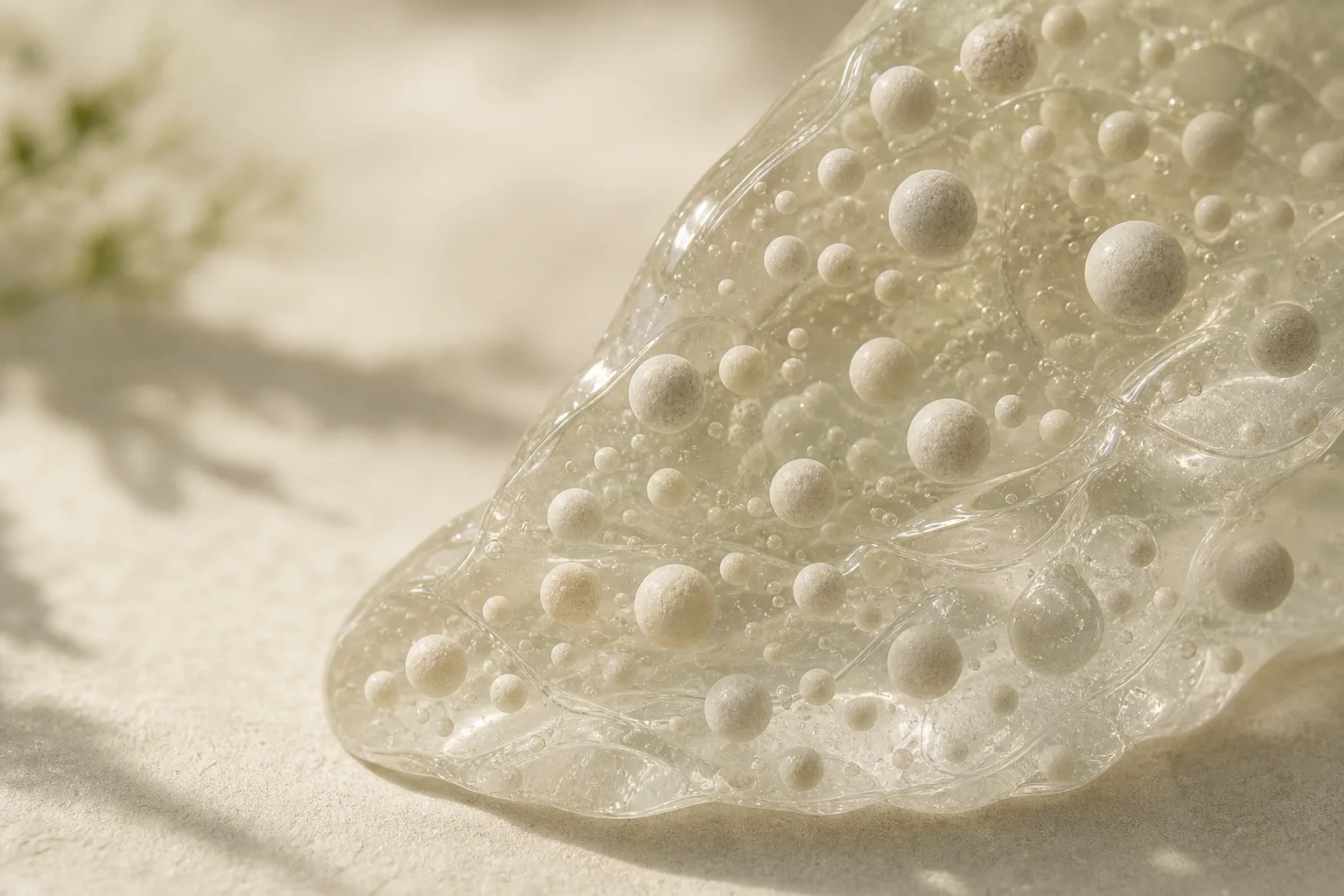
The carrier gel consists of carboxymethylcellulose, glycerine and water. The biodegradable CaHA microspheres resemble the mineral component of bone and are resorbed over a period of months.
The effect occurs in two distinct phases. Initially, the carrier gel can compensate for lost volume, smooth deeper wrinkles and provide more visible support for facial contours. Subsequently, the CaHA microspheres stimulate fibroblasts to produce collagen and elastin. This process can further improve tissue structure and firmness.
In this process, the CaHA microspheres can serve as a scaffold for fibroblasts. Biostimulation aims to promote the formation of new collagen and elastin as well as remodelling of the extracellular matrix, meaning the structures that surround and support cells in the tissue.
Radiesse filler is therefore both a CaHA filler and a biostimulator. However, the immediate volumising effect must not be equated with the subsequent collagen stimulation. When looking for a biostimulator for the face, this distinction is particularly important because the initial findings and the goal determine which aspect of the effect should take priority.
A randomised split-face study with histological examination showed differences between CaHA and hyaluronic acid fillers: after four months, more type III collagen was detectable in the areas treated with CaHA, and after nine months, more type I collagen. This was interpreted as a sequence of early formation of new collagen followed by maturation of the collagen matrix. Markers of elastin formation, cell proliferation and angiogenesis were also higher in the CaHA-treated areas examined. Such findings describe a possible regenerative tissue effect but do not allow the individual aesthetic result to be predicted.
Immediate effect and full effect: when is the result visible?
An initial immediate Radiesse effect may be visible directly after the injection: contours appear more defined or a volume deficit appears more balanced. In the first few days, swelling or minor bruising may alter the appearance. The immediately visible appearance is therefore not automatically the result to be assessed as final.
The full effect of Radiesse on skin firmness and structure develops gradually, as the stimulated production of collagen and elastin takes time. Progress is therefore assessed not only directly after treatment but also after an interval. A follow-up assessment helps distinguish immediate volume, temporary reactions and subsequent collagen formation.
The increasing effect of collagen formation is often described over a period of about two to three months. Whether a follow-up treatment is appropriate should therefore not be decided solely on the basis of the immediate result.
Who is Radiesse treatment suitable for?
Radiesse® may be an option for patients whose main concerns are age-related volume loss, deeper wrinkles, less clearly defined facial contours or declining tissue firmness. The use of Radiesse in the face aims for harmonious proportions rather than a standardised change.
The method may be particularly interesting when volume support and skin quality are to be addressed together. However, even when researching “facial biostimulator”, general suitability should not be assumed prematurely. Skin thickness, tissue layers, the extent of laxity and the desired result must be considered together.
Radiesse® is not the right solution for every concern. In cases of substantial excess skin or pronounced tissue laxity, a surgical lift may be superior to minimally invasive treatment. An alternative should also be chosen if a particular region is anatomically unsuitable, medical contraindications exist or another material meets the objective more precisely.
Radiesse in the face: possible areas and treatment goals
Radiesse in the face is primarily considered where structural support, contouring or the softening of deeper wrinkles is needed. Possible regions and goals include:
- Cheeks and zygomatic arch in cases of age-related volume loss
- Chin and chin contour to support balanced proportions
- Jawline for more defined contouring of the lower face
- Nasolabial folds and marionette lines in cases of deeper tissue changes
- several coordinated areas as part of a liquid lift concept
Radiesse treatment for nasolabial folds considers more than just the visible line. Volume shifts in the midface and the surrounding tissue structures often influence its prominence. Injection planning should therefore include the entire region rather than exclusively filling the fold.
A liquid lift can also strategically combine several areas. It can support contours and visually harmonise sagging areas, but it is not equivalent to a surgical facelift. With Radiesse Berlin, the initial focus is therefore on what can realistically be achieved with a minimally invasive method.
Radiesse for dark circles: only after a thorough anatomical assessment
The search query Radiesse dark circles describes a sensitive treatment region. Shadows under the eyes can arise from volume loss, tissue structure or other causes. The thin skin and complex anatomy of the tear trough require a particularly cautious assessment of treatment indications.
Radiesse under the eyes is therefore not a blanket recommendation. Before any potential treatment, the cause, skin and tissue quality, the course of blood vessels and the appropriate injection plane must be assessed by a specialist physician. If you are considering Radiesse for dark circles, another procedure may also be more suitable. Further options are discussed on the page about injections for dark circles.
Neck, décolletage and backs of the hands
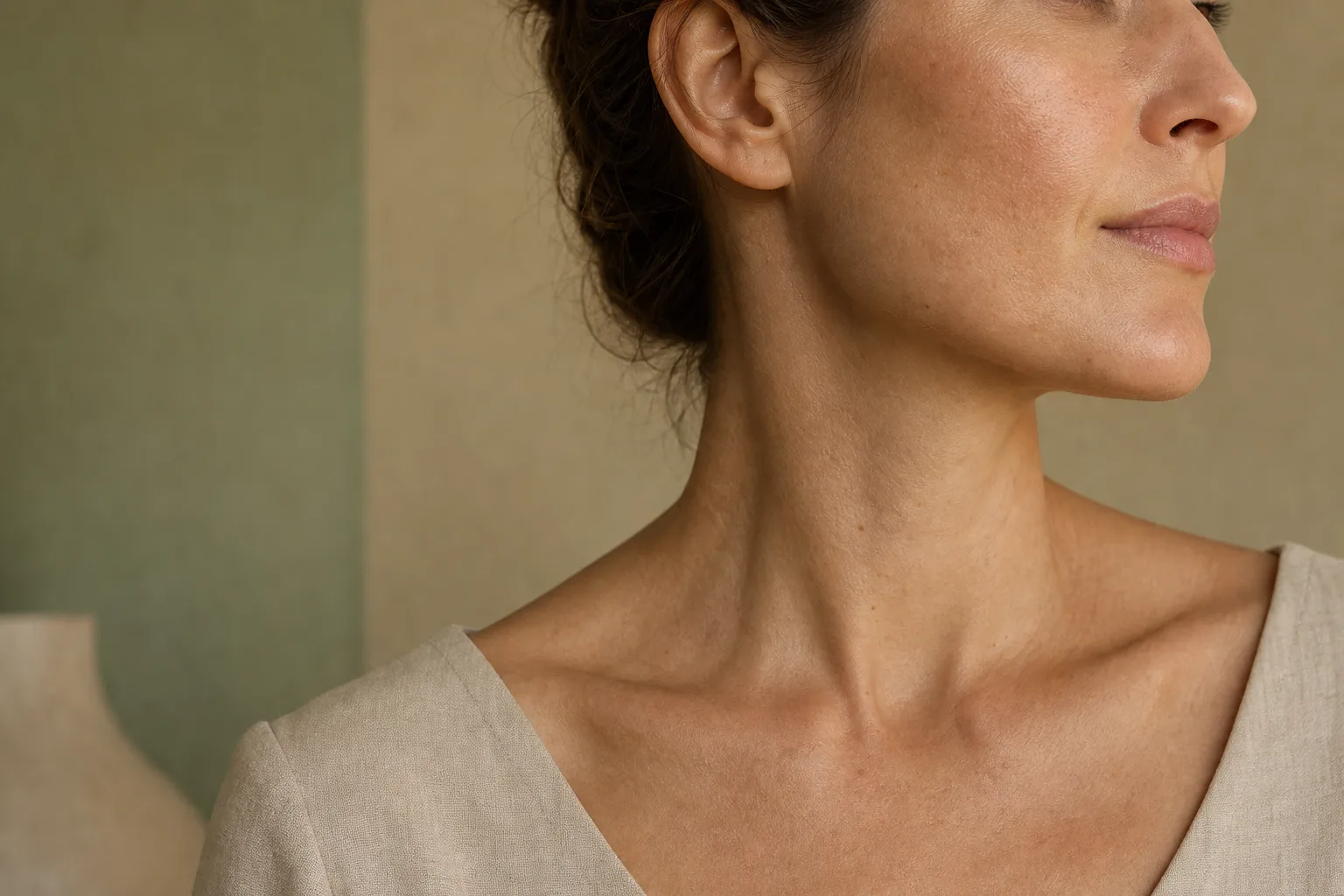
Radiesse on the neck, décolletage or backs of the hands often serves a different purpose from facial contouring. Depending on the treatment plan, the focus here is on improving skin structure and firmness through biostimulation, rather than substantial volume enhancement.

Particularly when using Radiesse on the neck, the type of tissue change present must be assessed. A biostimulatory treatment can support skin quality, but cannot remove substantial excess skin. Product placement and treatment goals on the décolletage and hands are also adapted to the respective anatomy.
For biostimulation over a broader area, CaHA can be used in diluted or highly diluted form. Dilution is carried out with saline solution and, where appropriate, lidocaine. With this so-called diluted or hyperdiluted Radiesse, the focus is less on volume enhancement and more on supporting dermal thickness, skin texture and firmness, as well as treating fine crepey lines. A developing effect is often described after about four to six weeks, once collagen synthesis has begun.
In addition to the neck and décolletage, the specialist literature also mentions the upper arms and buttocks as possible regions for this type of biostimulation over a broader area. The back of the hand is also an established indication for CaHA. Whether any of these applications is suitable in an individual case depends on tissue quality, findings and the treatment goal.
How Radiesse treatment in Berlin proceeds
At Dottore Caletti, Radiesse treatment in Berlin begins not with the injection, but with assessment by a specialist physician. Consultation, findings, planning, treatment, aftercare and follow-up build on one another. This approach helps to avoid unnecessary amounts of product and define realistic goals.

The specific procedure depends on the area and extent of treatment. Treatment takes place at the practice; possible anaesthesia, injection technique and aftercare are planned individually. If you are considering treatment, you can request an appointment for a specialist medical consultation.
1. Consultation, findings and individual treatment plan
During the initial consultation, you describe the change you have noticed and the result you would like. Dottore Caletti assesses the anatomy, volume distribution, skin and tissue quality, and the dynamics of the region concerned. Pre-existing conditions, medications and possible contraindications are also taken into account.
Only then are the treatment areas, the required amount of product and a realistic goal established. This may reveal that Radiesse® forms only part of a longer-term concept or that another method is more suitable. This approach integrates the treatment into Aesthetic Longevity and Well-Ageing, without making the individual product the starting point for every decision.
2. Injection, shaping and treatment duration
Before the Radiesse injection, the planned region is prepared. Local anaesthesia can be used if needed. The CaHA filler is then precisely injected into the previously defined tissue layers and shaped according to the treatment goal.
Radiesse treatment usually takes about 20 to 45 minutes. For a more extensive liquid lift, the appointment may last up to around 60 minutes. These figures are guidelines; multiple areas and more complex planning may require more time.
3. Aftercare, downtime and post-treatment behaviour
Redness, swelling, small bruises or a feeling of pressure may occur after the injection. Many patients can return to their daily routine shortly afterwards. However, an immediate, unrestricted return to social activities cannot be promised, particularly if visible swelling or bruising occurs.
The precautions to take and when it is appropriate to resume exercise after Radiesse are explained according to the area and extent of treatment. The individual Radiesse aftercare instructions should be followed. If symptoms are unexpected, worsening or persistent, it is important to contact the practice promptly.
Radiesse before and after: assessing natural results realistically
When considering Radiesse before and after, two phases of action occurring at different times must be taken into account. Early images may show the immediate volume but may also be affected by swelling. Later photos are more likely to reflect how contour, structure and skin firmness have developed over time.
A sound Radiesse before-and-after comparison requires angles, lighting and facial expressions that are as standardised as possible. Even then, other people's results cannot be extrapolated to your own clinical findings. Anatomy, tissue quality, product quantity, injection plane and individual response lead to different courses of development.
The full effect of Radiesse should not be assessed solely on the basis of a single photo either. What matters is whether the result looks natural at rest and in motion, suits the proportions and meets the jointly agreed goal. Radiesse Berlin at Dottore Caletti therefore aims not for a conspicuous change, but for support of the individual's appearance under specialist medical supervision.
How long does Radiesse last?
The effect typically lasts approximately 12 to 18 months. In individual cases, a result may persist for up to around 24 months. The exact duration varies depending on the treatment area, initial clinical findings, intended effect and individual tissue response.
Immediate volume, gradual biostimulation and subsequent degradation do not occur as clearly separated stages. The full effect of Radiesse is therefore just as individual as the point at which a maintenance treatment may be considered. Repeat treatment should not take place automatically after a certain number of months, but following a current examination and a joint review of the goal.
Radiesse or Sculptra – and when is hyaluronic acid more appropriate?
The decision between Radiesse and Sculptra depends largely on whether an immediate volumising effect is desired and anatomically appropriate. Radiesse® combines its gel-like carrier material with CaHA-based biostimulation. Sculptra® develops its effect more gradually and therefore follows a different treatment approach.
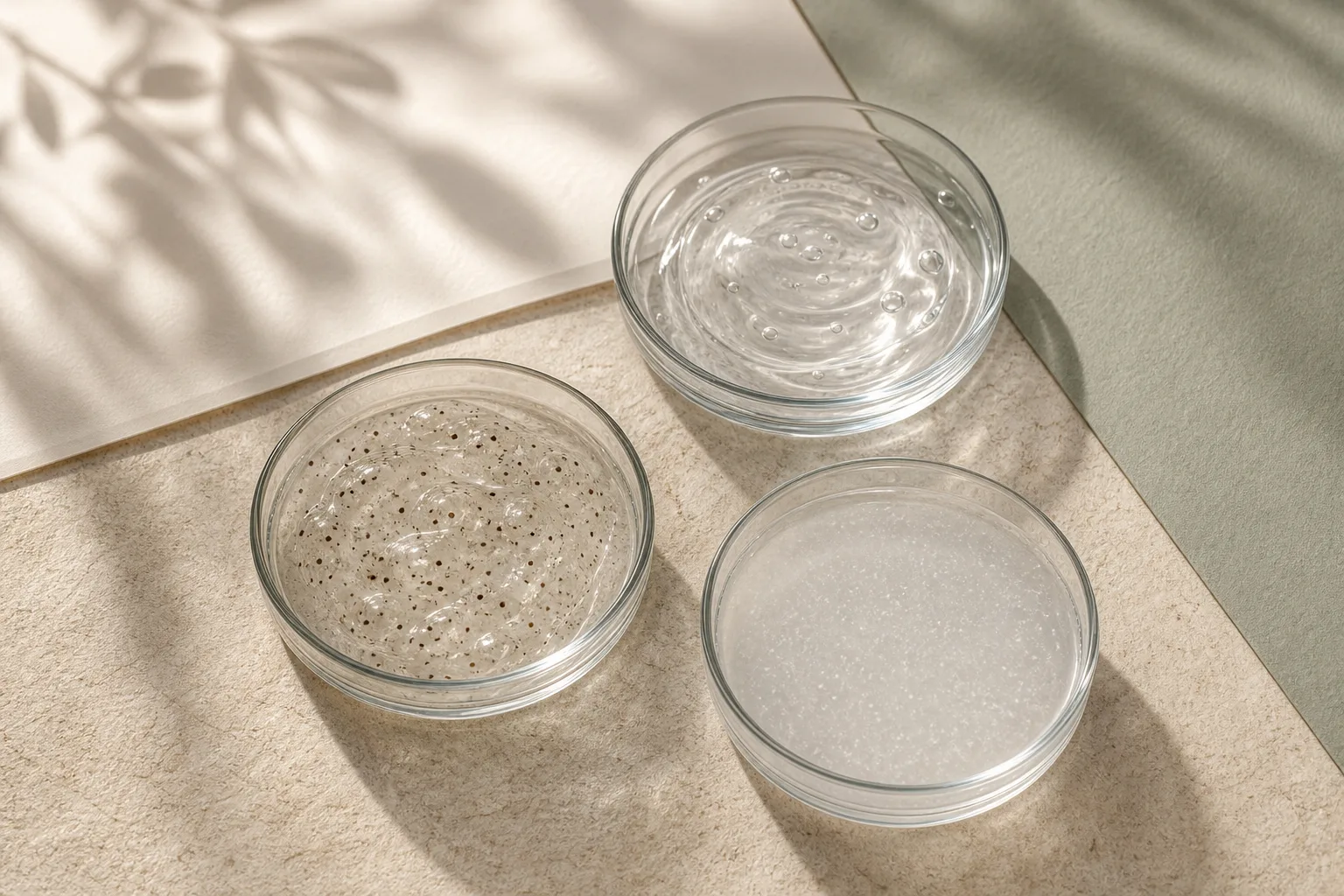
When weighing up Radiesse or Sculptra, factors considered include the region, tissue quality, volume requirements and desired time course. Neither procedure is the better choice in every case. A comparison should always start with the individual clinical findings, not the familiarity of a product name.
Choosing between Radiesse and hyaluronic acid is not simply a question of longevity either. Hyaluronic acid serves different volume and correction goals, while Radiesse filler combines immediate structural support with biostimulation. Which method or combination is appropriate is decided according to the region concerned as part of specialist wrinkle injection treatment.
CaHA, hyaluronic acid and PLLA in direct comparison
The three materials differ primarily in their mechanism of action, load-bearing capacity, time course and reversibility. The following time frames are typical clinical and practical guidelines; they may vary in individual cases.
Hyaluronic acid is a hydrophilic polysaccharide and binds water. Its effect is primarily based on hydration and gel volume. It may be considered for fine lines, more superficial wrinkles, lips and anatomically suitable sensitive regions, among other areas. Another difference is the option of enzymatically breaking down hyaluronic acid with hyaluronidase if needed.
CaHA is viscoelastic and mechanically load-bearing. This may be relevant when contouring the cheeks, chin and jawline, as well as for deeper wrinkles and the backs of the hands. At the same time, the material stimulates collagen and elastin. In terms of treatment approach, Radiesse® therefore sits between hyaluronic acid and PLLA: it provides more immediate volume than PLLA and combines this with a structured tissue effect.
PLLA acts primarily as a biostimulator over several months and provides hardly any immediate volume. Treatment is often planned as a course of several sessions. Whether this slower build-up or the combination of immediate volume and biostimulation better suits the concern must be decided on the basis of anatomy, region and desired time course.
Side effects, contraindications and limitations
Possible Radiesse side effects include temporary redness, swelling, haematomas and a feeling of pressure. Less commonly, intolerance reactions or nodules may occur. As with any injection treatment, individual risks must also be discussed during the personal informed consent consultation.
Rarely reported complications also include irregularities, granulomas and infections. The occurrence of such reactions depends, among other factors, on the indication, product placement and injection technique.
Careful assessment of the indication, anatomical experience, sterile technique and accessible medical follow-up care are essential for the responsible management of Radiesse risks. Pre-existing conditions, medications and possible contraindications are assessed in advance. Which factors argue against treatment in an individual case is clarified during the initial consultation.
A practically relevant difference from hyaluronic acid is that CaHA cannot be enzymatically dissolved with hyaluronidase. A comparable immediate “reset” is therefore not available with Radiesse®. This places particular demands on assessment of the indication, product selection, dosage and injection technique.
The limitations include the fact that Radiesse® does not remove excess skin and cannot replace a surgical lift in cases of pronounced laxity. Not every wrinkle should be injected directly, and not every sensitive facial region is suitable for CaHA. If unusual or worsening symptoms occur, prompt medical review is required. An open discussion of Radiesse side effects is therefore as much a part of planning as the desired result.
Radiesse prices and a personal initial consultation in Berlin
The individual Radiesse price depends in particular on the treatment area, the quantity of product required and the complexity of planning. A single wrinkle, contouring several regions and a more extensive liquid lift concept have different requirements. Radiesse prices therefore cannot responsibly be compared solely on the basis of a flat amount.

A specific Radiesse price is discussed after a specialist examination and determination of the extent of treatment. You will thus receive a personal cost plan that reflects the treatment actually planned. When evaluating different Radiesse prices, medical qualifications, anatomical planning, informed consent and follow-up care should be considered alongside the amount.
Dottore Caletti is a specialist in plastic and aesthetic surgery in Berlin and combines surgical, minimally invasive and regenerative procedures. This also allows Radiesse treatment in Berlin to be assessed in relation to hyaluronic acid, Sculptra® or a surgical approach. If the method does not suit your clinical findings, this will be discussed just as openly as medically appropriate alternatives.
For a personal assessment of Radiesse Berlin, you can discuss your individual options with Dottore Caletti. During the initial consultation, the starting situation, expectations, risks, alternatives and the specific cost range are clarified together.
Your path to treatment
The treatment pathway begins with the specialist assessment and ends with a follow-up assessment at a later date. Every decision is guided by the region, tissue and jointly defined goal.
Consultation and medical history
You describe the change you have noticed and your expectations. Dottore Caletti takes a history of pre-existing conditions, medications and possible contraindications and explains which goals appear achievable in principle with minimally invasive treatment.
Analyse the clinical findings
Anatomy, volume distribution, skin thickness, tissue quality and movement dynamics are assessed. In sensitive regions such as the tear trough, particular caution is exercised when assessing whether CaHA is suitable at all.
Plan the approach
Based on the examination, the treatment areas, injection plane, product volume and, if applicable, dilution are determined. Radiesse®, hyaluronic acid, Sculptra® and a surgical approach are weighed against one another.
Perform the treatment
The intended area is prepared and, if necessary, locally anaesthetised. Dottore Caletti then injects the CaHA filler into the planned tissue layers and moulds it according to the agreed goal.
Coordinate aftercare
You will receive aftercare instructions tailored to the area and extent of treatment. Redness, swelling, bruising or a feeling of pressure are assessed; if you experience unusual or worsening symptoms, you should contact the practice promptly.
Monitor progress
After an interval, the immediate volume, reactions that have subsided and gradual biostimulation are assessed. Only then is a joint decision made on whether observation, another session or a different procedure is appropriate.
Compare CaHA, hyaluronic acid and PLLA
The materials differ in their mechanism of action, immediate volume and time course. Anatomy, tissue quality, area and treatment goal are decisive.
| Radiesse® (CaHA) | Hyaluronic acid | Sculptra® (PLLA) | |
|---|---|---|---|
| Mechanism of action | Gel volume plus collagen and elastin stimulation | Hydration and volume through water binding | Primary biostimulation over several months |
| Immediate volume | Present | Present | Minimal |
| Time course of effects | Immediate effect, followed by gradual biostimulation | Primarily through hydration and gel volume | Gradual build-up over several months |
| Typical areas | Cheeks, chin, jawline, deep wrinkles, backs of the hands | Fine lines, lips, superficial wrinkles, sensitive areas | Area determined individually after examination |
| Session planning | Based on findings and follow-up assessment | Individually based on findings | Often as a course of several sessions |
| Particularly suitable for | Contour support with additional biostimulation | Differentiated volume and correction goals | Slow biostimulatory build-up |
| Reversibility | Cannot be dissolved with hyaluronidase | Can be enzymatically broken down with hyaluronidase | Not specified in the material |
The table provides initial guidance. Which method or combination is suitable can only be assessed after an examination by a specialist physician.
Frequently asked questions
Is Radiesse a filler or a biostimulator?
Radiesse® is both a dermal filler and a biostimulator. The gel-like carrier material can provide immediate volume and support contours. The calcium hydroxylapatite microspheres it contains subsequently stimulate the formation of collagen and elastin. Radiesse® therefore combines an immediately visible change with skin improvement that develops gradually.
When is the full effect of Radiesse visible?
A volumising or contouring effect may be noticeable immediately after the injection. The full effect of Radiesse on skin firmness and structure, however, only becomes apparent gradually, because the stimulated formation of collagen and elastin takes time. Swelling can also influence the early impression. When the result can be meaningfully assessed is determined individually at the follow-up appointment.
How long does Radiesse last, and when is a top-up appropriate?
The effects of Radiesse® typically last about 12 to 18 months, in some cases up to around 24 months. The individual duration depends, among other things, on the treatment area, the initial findings and the treatment goal. A top-up should not follow a rigid schedule, but rather a medical assessment of progress and the current condition of the tissue.
Is Radiesse or hyaluronic acid more suitable for me?
Whether Radiesse® or hyaluronic acid is more suitable depends on anatomy and the treatment goal. Radiesse® combines volume and contour support with biostimulation. Hyaluronic acid may be more suitable for other volume and correction goals. A general recommendation is therefore not appropriate; the choice is made following a specialist examination of the area concerned.
What is the difference between Radiesse and Sculptra?
When considering Radiesse or Sculptra, the desired progression of effects is decisive. Through its carrier gel, Radiesse® can combine an immediate volumising effect with biostimulation. Sculptra® develops its effects more gradually. Which product is more suitable depends on the tissue, area, volume requirements and expectations, and should be decided by a specialist.
Is Radiesse suitable for dark circles?
Radiesse for dark circles is not a universally suitable standard treatment. The tear trough has a delicate anatomy; dark shadows, volume loss and tissue changes can also have different causes. Before an injection, the skin, tissue, course of the blood vessels and suitable injection plane must be examined carefully. Depending on the findings, another procedure may be more appropriate medically.
Is the treatment painful, and how long will I be restricted afterwards?
The injection may feel uncomfortable; local anaesthesia can be considered if needed. Temporary redness, swelling, bruising or a feeling of pressure are possible. Many patients can return to their everyday lives shortly afterwards, but an immediate, unrestricted return to social activities cannot be promised. As a precaution, allow sufficient time before important appointments.
What should I bear in mind after Radiesse treatment?
After Radiesse treatment, you should follow the individual aftercare instructions provided by the specialist practice. The precautions that apply and when it is appropriate to resume exercise or other strenuous activities will be explained according to the treatment area and extent. If you experience unexpected, increasing or persistent symptoms, you should contact the practice promptly so that the findings can be checked by a doctor.
Can Radiesse be combined with other aesthetic treatments?
Radiesse® can, in principle, be part of a combined aesthetic treatment plan. Whether a combination is appropriate depends on the findings, the areas involved, the respective mechanisms of action and the timing. Dottore Caletti determines the sequence and intervals following a specialist examination, rather than combining different procedures without an overarching treatment plan.
What are the limitations of a liquid lift with Radiesse?
A liquid lift with Radiesse® can compensate for volume loss, support contours and improve skin quality. However, it does not replace a surgical facelift. In cases of substantial excess skin or pronounced tissue laxity, a surgical procedure may achieve more. The specialist consultation openly clarifies whether a minimally invasive treatment can address your findings and achieve your desired result.