
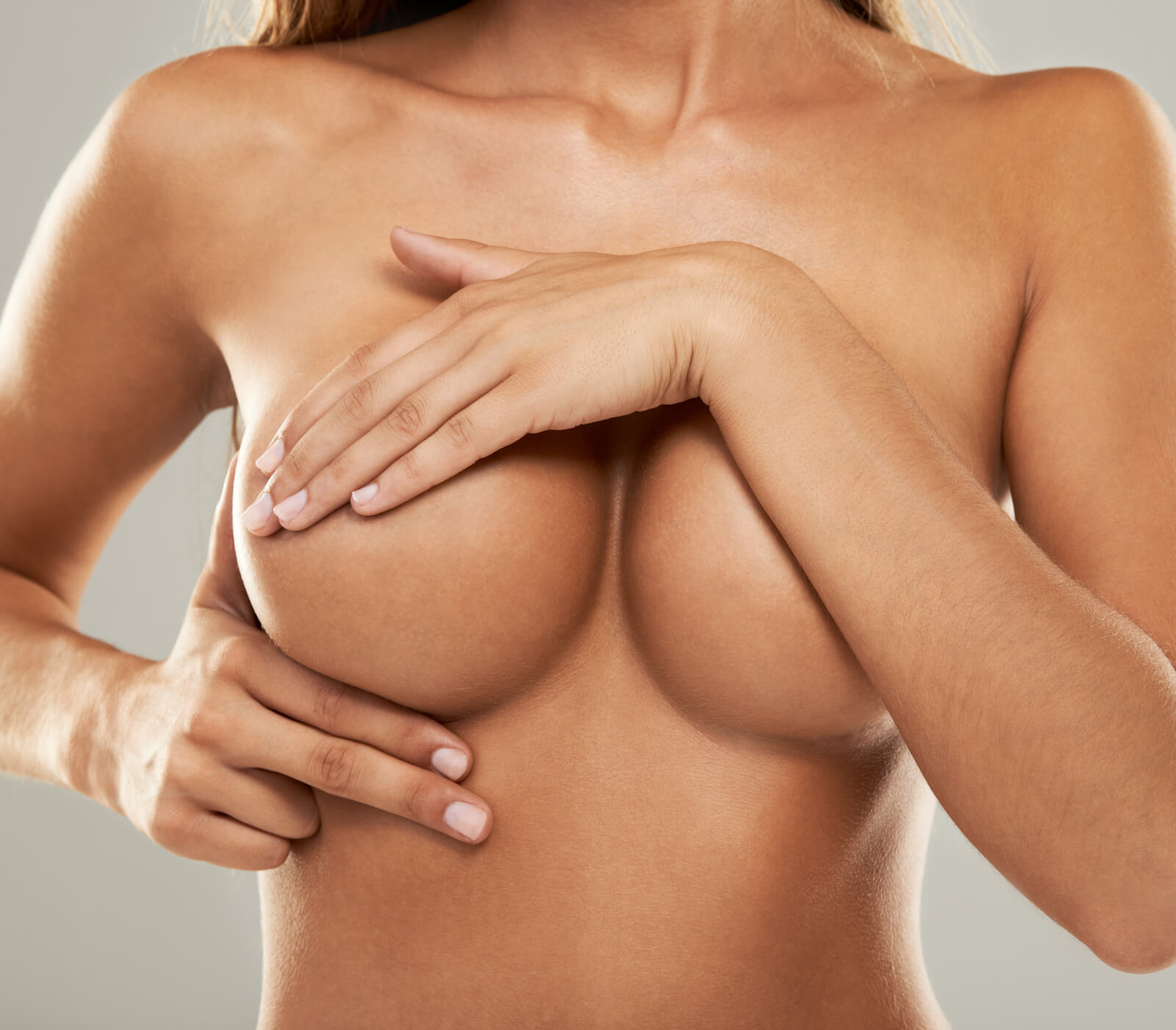
Breast Augmentation with Autologous Fat in Berlin
Dissatisfaction with breast size or shape is not uncommon. Many women would like fuller breasts but are reluctant to have implants because they do not want a foreign material in their body or have previously had a negative experience with implants.
Breast augmentation with autologous fat, also known as lipofilling, offers an alternative to implants. During the procedure, fat is removed from another area of the body by liposuction under general anaesthesia. The transferred fat can establish a new blood supply and become integrated into the surrounding tissue. As no synthetic implant is used, implant-specific risks are avoided.
At my specialist practice for plastic and aesthetic surgery in Berlin, I offer breast augmentation with autologous fat. The procedure can be tailored to your individual aims, whether you would like to refine the shape of your breasts or improve asymmetry. It also incorporates liposuction of the donor area.
- Duration of surgery
- 2–3 hours
- Anaesthesia
- General anaesthesia
- Hospital stay
- Day case or 1 overnight stay
- Return to social activities
- After approximately 1 week
- Return to work
- After 1–2 weeks
- Exercise
- After 6–8 weeks
- Initial wound healing
- 1 week
- Cost
- From €6,000
- Aftercare
- Dressings or tape if required, a supportive bra and follow-up appointments
The procedure consists of two stages. First, fat is harvested from a suitable donor area, most commonly the abdomen, hips, thighs or buttocks. It is then processed under sterile conditions. This takes some time, which is one reason why the operation lasts approximately two to three hours. Once viable fat cells have been isolated and prepared, they can be carefully injected into the breast. The fat is placed in small amounts at selected sites behind the breast tissue and within the subcutaneous tissue. Distributing it across multiple tissue planes helps the transferred fat establish a blood supply and creates a natural-looking breast shape. No conventional surgical incisions are required, although very small access points are made for the cannulas. The technique can be used not only to increase breast volume but also to refine breast shape and improve differences in size or asymmetry. As fat must first be harvested, the procedure includes liposuction and may be combined with liposuction of other suitable areas where appropriate. Breast augmentation with autologous fat may be performed as a day case or with an inpatient stay. If admission is recommended, one overnight stay is usually sufficient.
As with any surgical procedure, breast augmentation with autologous fat carries certain risks. Careful planning and an experienced surgeon can reduce these risks, but cannot eliminate them. General surgical risks include bleeding, secondary bleeding, pressure-related tissue damage and delayed wound healing. Following the aftercare instructions closely also helps to minimise avoidable complications.
Recovery after breast augmentation with autologous fat is often quicker than after breast augmentation with implants. However, both the injection sites and the areas from which the fat was harvested need time to heal. I will provide you with a personalised aftercare plan designed to support your recovery. During the first few weeks, you should sleep on your back to protect your breasts and avoid placing additional pressure on them.
Exercise and Recovery
After approximately six to eight weeks, you can usually begin exercising again slowly and cautiously. Higher-impact activities such as jogging should initially be avoided, as should the sauna. For the first six weeks, you should also protect the treated skin from direct sunlight to reduce the risk of noticeable scar pigmentation.
Recovery is often quicker than after breast augmentation with implants. Swelling and redness should begin to settle after approximately one week, although healing varies considerably between patients. Despite the use of fine cannulas and the careful, even placement of the fat, not all transferred fat cells will establish an adequate blood supply. Some loss of volume during the first year is therefore to be expected. The final result can usually be assessed after approximately one year, once the remaining fat has become established and developed a stable blood supply.
Breast Augmentation with Implants or Autologous Fat
Breast augmentation with autologous fat can produce a very natural-looking result. However, the increase achievable in a single procedure is generally limited to approximately one cup size. Autologous fat is particularly suitable for improving asymmetry and refining breast shape. This technique may therefore be a good option for women seeking a moderate increase in volume and a natural result. It also avoids implant-specific risks and is often associated with a shorter recovery period.
Implants provide greater flexibility when choosing the desired breast size, as they are available in a wide range of volumes and shapes. The procedure is also not dependent on the patient having sufficient fat reserves. In very slim patients, harvesting enough fat for a meaningful increase in breast volume may be difficult. Implant surgery is confined to the breast area, whereas breast augmentation with autologous fat, or lipofilling, also requires the donor sites to heal after liposuction.
Both methods have advantages and disadvantages. The most suitable option must be considered individually and will depend on factors including your desired outcome, anatomy and available donor fat.
Frequently Asked Questions
Who is suitable for breast augmentation with autologous fat?
The procedure may be suitable for women who do not want an implant or who have previously experienced problems with implants but would still like fuller breasts. It is also particularly well suited to patients seeking a natural-looking, moderate increase in breast volume.
How long should I wait before exercising again?
You should generally avoid strenuous activity for six to eight weeks after surgery. You can begin with light activity and gradually work towards higher-impact exercise such as jogging. During the first six weeks, you should also avoid heavy lifting; in this context, anything weighing more than three kilograms is considered heavy.
When should breast augmentation not be performed?
Certain pre-existing medical conditions or allergies to medication may make the procedure unsuitable. Surgery should also not be performed if the wish for breast augmentation does not come from the patient herself. Unrealistic expectations may likewise be a reason not to proceed.
During your personal consultation, I will discuss your reasons for considering surgery, review any relevant medical conditions and explain what can realistically be achieved.
What is the recovery process like?
After surgery, the breasts usually feel swollen, firm and tight. It can take some time for the swelling to subside, and the duration varies considerably from patient to patient.
When will I see the final result?
The final result can usually be assessed after approximately one year. By this stage, the surviving fat tissue will have become established and developed a stable blood supply.