
Hooded eyelid surgery: When is it an option?
Does excess upper eyelid skin bother you or impair your vision?
Hooded eyelid surgery may then be an option.
Lowered eyebrows and a drooping eyelid margin require separate assessment.
During my consultation on Kurfürstendamm in Berlin, we will identify the cause together. Tell me what change you would like.
- Treatment duration
- About 45 minutes to an hour
- Ready for social activities
- Usually after about one to two weeks
- Anaesthesia
- Local anaesthesia is often possible. The appropriate type of anaesthesia depends on the procedure and your health status.
- Clinic stay
- Often outpatient; depending on the procedure, anaesthesia and your health status
- Fit for work
- Usually after about one to two weeks, depending on your work and healing progress
- Exercise
- As a guide, exercise can be resumed after about two weeks at the earliest. At your follow-up appointment, we will agree with you on when light or more strenuous activity is possible again, based on the type of activity and your healing progress.
- Wound healing
- Varies from person to person; healing is not fully complete after one to two weeks
- Costs
- Depending on the planned procedure and its extent
- Aftercare
- Allow time for recovery and medical check-ups; aftercare depends on the procedure and your healing progress.
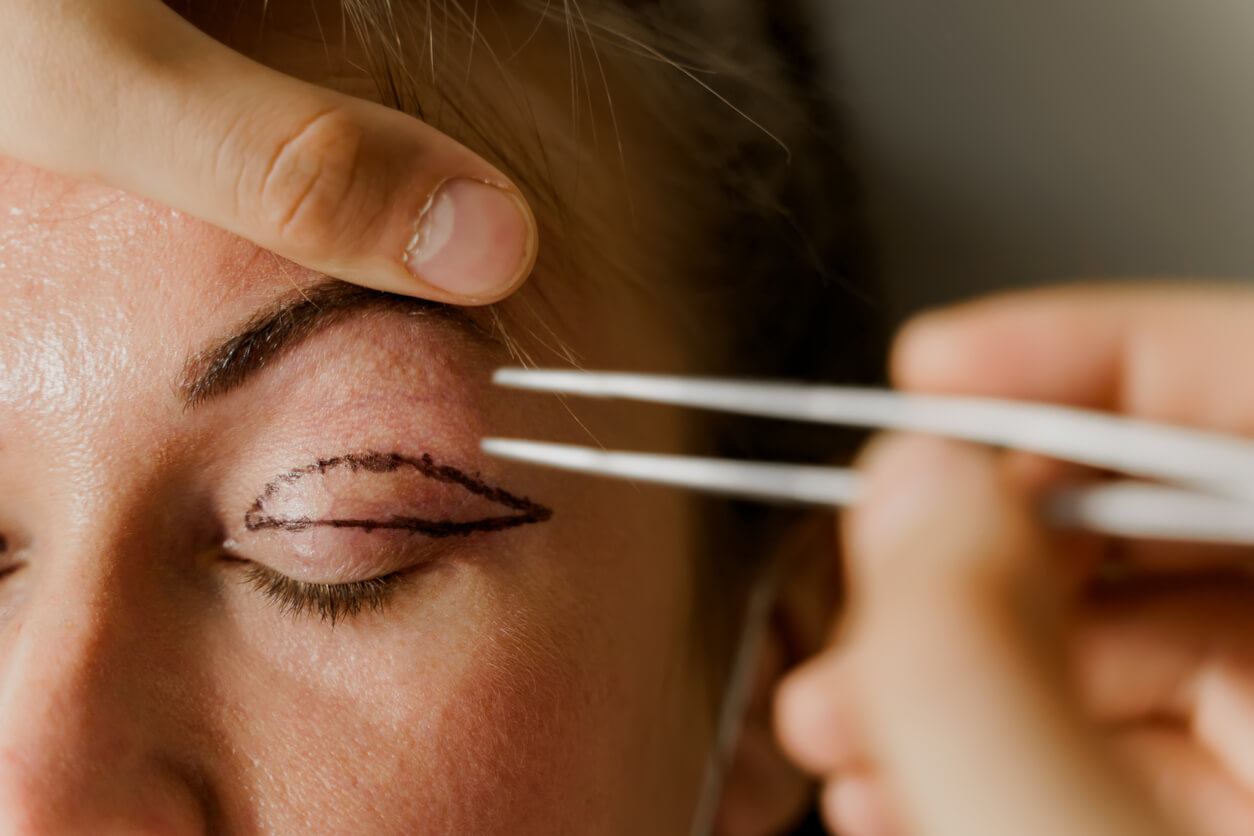
Before the operation, we examine your eye area and discuss which correction is appropriate for your findings. During the procedure, excess tissue is removed and the wound is closed with a fine suture. The incision follows the natural eyelid crease: the resulting scar may be inconspicuous there, but it remains. An upper eyelid lift takes about 45 minutes to an hour.
Swelling and bruising may occur after the procedure. Surgical risks include postoperative bleeding, infections and impaired wound healing; serious complications can also affect vision. If you experience new visual disturbances, severe eye pain or sudden severe swelling after the procedure, please seek an emergency ophthalmology service or an emergency department immediately. We will discuss which risks require particular consideration in your case before you make a decision.
Usually allow about one to two weeks of recovery before returning to work and social engagements. Wound healing takes longer. How much time you need depends on the extent of the procedure, your work and your individual healing progress. At your follow-up appointment, we will agree with you on when physical exertion is possible again.
What are hooded eyelids?
Hooded eyelids usually refer to excess skin on the upper eyelid that partially or completely conceals the natural eyelid crease. The skin may rest on the mobile part of the eyelid and make the eyes look heavy. You may mainly notice that applying make-up to your upper eyelid is more difficult or that the eyelid crease is barely visible.
This is often caused by dermatochalasis: a loosening of the eyelid skin and underlying tissue that can occur with increasing age. Genetic factors naturally also play a role in the development of hooded eyelids and bags under the eyes. The condition is therefore not a matter of personal failings.
This differs from the rare condition blepharochalasis. It involves repeated episodes of eyelid swelling, which can lead to thinner, looser eyelid skin over time. The term is not another word for ordinary hooded eyelids; recurrent swelling requires medical assessment.
Is it the eyelid skin or the brows?
Whether hooded eyelids or drooping eyebrows are changing the appearance of your eyes cannot be reliably assessed from a single photograph. Eyelid skin, brow position and the position of the eyelid margin interact. During the examination, we therefore assess these areas together rather than prematurely treating only the visible skin fold.
| What changes | Implications for treatment | |
|---|---|---|
| Excess upper eyelid skin | The skin partially or completely conceals the natural eyelid crease and may rest on the mobile part of the eyelid. | An upper eyelid lift can remove the excess skin. Depending on the findings, fat or muscle tissue may also be taken into account; not all tissue needs to be removed. |
| Drooping brows | When the brows descend, tissue above the upper eyelid is pushed downwards. This can make the eye area look as though there is excess skin or make an existing hooded eyelid more noticeable. | Removing upper eyelid skin alone may then not be the appropriate solution. |
| Ptosis (blepharoptosis) | The entire upper eyelid droops. It is not just a fold of skin: the eyelid margin itself sits lower; in pronounced cases, it can cover the pupil. | Such a change cannot automatically be corrected by removing excess skin. |
The question “Hooded eyelids or drooping eyebrows?” is therefore a good starting point for the discussion, but not a self-test. Several causes may also be present at the same time. What matters is which structure determines the findings and which function needs to be preserved or improved.
When surgery for hooded eyelids may be appropriate
Surgery is an option if there is actual excess skin and you would like a change. Perhaps you would like to see more of the mobile part of your upper eyelid again or would prefer a more rested expression. Neither your age nor the prominence of a skin fold alone means that treatment is required.
An upper eyelid lift is a surgical procedure to remove excess skin from the upper eyelid. Depending on the findings, fat or muscle tissue may also be taken into account; not all tissue needs to be removed. The treatment can correct excess skin, but it does not stop natural ageing and does not replace targeted treatment for ptosis.
Blepharoplasty is the medical umbrella term for surgical correction of eyelid skin and, where appropriate, other soft tissue. It can be performed on the upper or lower eyelid. The term alone therefore does not indicate which area is being treated or which technique is suitable for your condition.
For me, removing hooded eyelids in Berlin means first understanding what you want, then carefully examining your condition. In my view, personal expectations, natural proportions and medical limitations belong together. In addition to aesthetic wishes, functional complaints can also be a reason for treatment.
What is possible without surgery
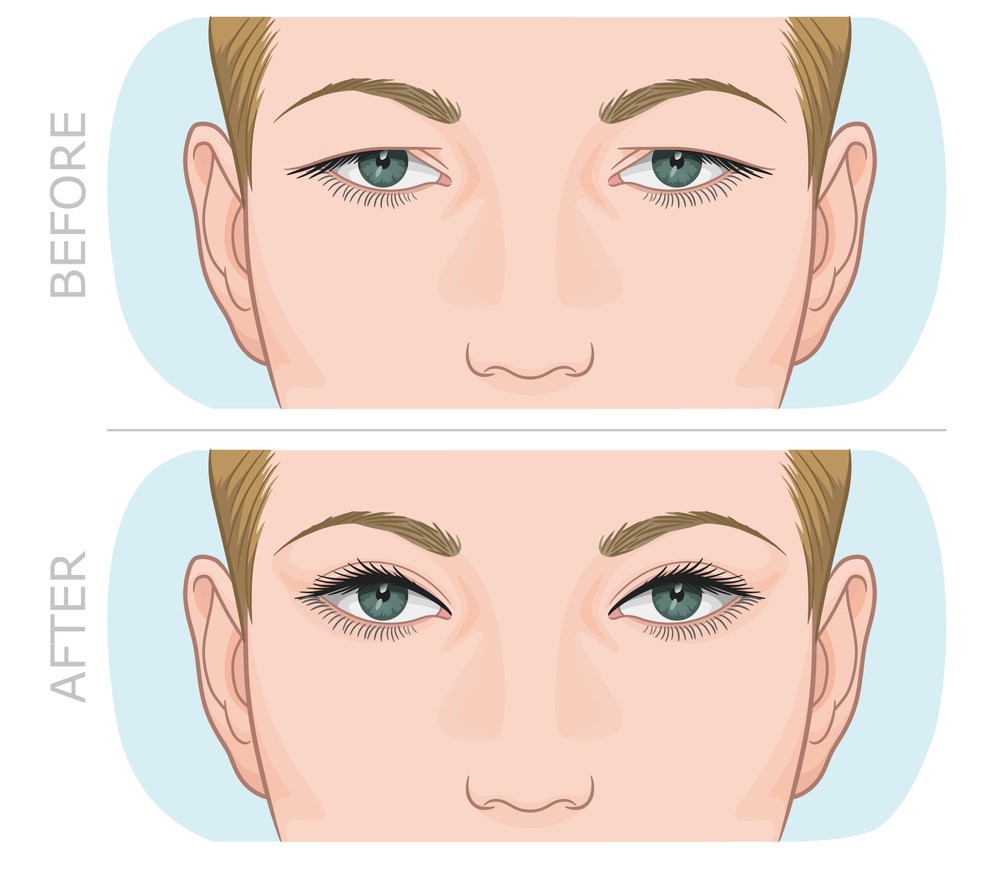
Anyone wishing to change hooded eyelids without surgery should distinguish between concealing them, skincare and treating another cause. Make-up can emphasise the eye area differently; tapes temporarily hold the skin in a different position. Neither approach removes excess skin.
Skincare targets the skin’s surface and can, for example, care for dry skin. However, a cream does not perform the function of surgical skin removal. If a concealed eyelid crease is your main concern, this distinction is more important than a general promise of tightening.
Where the initial conditions are suitable, a small, temporary brow lift through targeted injections of botulinum toxin may be an option. This relaxes muscles that pull the brows downwards; excess eyelid skin is not removed. This treatment also carries risks, including bruising, headaches and temporarily drooping eyelids.
If you would like to have hooded eyelids treated without surgery, we therefore first discuss what goal can actually be achieved without skin removal. Choosing no treatment is also a possible decision.
When the term laser treatment is used, it is worth asking exactly what it means: a surgical CO₂ laser can be used as a cutting instrument during an operation. This should be distinguished from treatments of the skin’s surface. “With a laser” does not automatically mean “without surgery”, nor does it mean that the procedure is suitable for every upper eyelid condition.
How to prepare for your decision
You do not need to know the diagnosis or to have already chosen a method before the consultation. It is helpful if you describe your wishes and symptoms as specifically as possible. You can prepare the following points:
- Your goal: What bothers you—overhanging skin, a heavy expression or restricted vision? What should remain unchanged?
- Your health: What pre-existing conditions, allergies or previous treatments are known?
- Your medication: What medicines do you take regularly or occasionally? Agree any changes with a doctor.
- Your eyes: Do you have dry eyes, irritation or other symptoms? Are there any ophthalmological findings?
- Your schedule: What professional and personal commitments need to be taken into account during recovery and follow-up care?
- Your unanswered questions: What would you like to know about anaesthesia, scars, risks and costs?
Would you like to know more about how the operation is performed and what matters afterwards? On my page about upper eyelid lifts, you will find detailed information on preparation, the procedure and healing. Allow yourself enough time to consider your decision and raise any unanswered questions.
What matters for possible coverage of costs
A desire for an aesthetic change and a medical need for treatment must be assessed differently. For purely aesthetic procedures, you generally pay the costs yourself. If functional symptoms are documented, coverage may be possible, but this must be clarified individually with your insurer.
The question of surgery for hooded eyelids and health insurance should therefore be discussed before making a firm surgical plan. Ask which findings and documents your insurer needs for its assessment. A medical recommendation does not replace the insurer's decision.
We explain the treatment costs based on the planned procedure and its extent. You should also ask about follow-up care and possible subsequent costs. If complications arise after purely aesthetic surgery, you may be required to contribute to the treatment costs; insurance for potential subsequent costs can also be discussed in advance.
When vision or eyelid function is impaired
If you notice any limitation in your vision, please first have the cause assessed by an ophthalmologist. Significant excess skin can impair the visual field; ptosis or other changes may also be responsible. The appropriate treatment can only be determined once this distinction has been made.
Recurring inflammation in overlapping skin folds or a change in the eyelid margin can also be medically relevant. Describe as specifically as possible when symptoms occur and which everyday activities they limit. An examination can also clarify whether tear production or other aspects of eye health need to be taken into account.
When it comes to surgery for hooded eyelids and health insurance, documented functional impairment is important. A heavy-looking gaze alone is not the same as a documented limitation of the visual field. Bring any existing ophthalmological findings to your consultation.
Personal consultation about the eye area
If you are looking into removing hooded eyelids in Berlin, you do not need to have chosen a treatment yet. I am Andrea Caletti, a specialist in Plastic, Reconstructive and Aesthetic Surgery and a specialist in Surgery. You can learn more about my background under About me.
Sometimes the questions also concern the area under the eyes. A lower eyelid lift corrects excess tissue on the lower eyelid and may be an option where there is corresponding excess skin or bulging. This does not automatically lighten dark circles under the eyes.
Visible bulging or swelling under the eyes is referred to as under-eye bags. Persistently protruding fatty tissue and fluctuating fluid retention are not the same and require different assessment. The overview of eyelid surgery helps distinguish between the different types of eyelid correction.
You can also reach me with questions before your visit via Contact and appointment booking. You can find me here: Dottore Andrea Caletti, c/o Vita Aesthetica, Kurfürstendamm 200, 10719 Berlin.
Let's get to know each other in person
Your questions about hooded eyelids
Are hooded eyelids and ptosis the same thing?
No: with hooded eyelids, excess skin covers the eyelid crease; with ptosis, the eyelid margin itself sits lower. Both can occur together. Removing skin alone therefore does not replace targeted treatment for ptosis.
Can a drooping eyebrow look like a hooded eyelid?
Yes. When the brow descends, it pushes tissue above the upper eyelid downwards. This can mimic or increase excess skin. We therefore also assess the brow position before recommending an upper eyelid lift.
Can younger adults also have hooded eyelids?
Yes. In addition to age-related changes, hereditary predisposition also plays a role in hooded eyelids. Younger adults can therefore already have a pronounced skin fold on the upper eyelid. Age alone does not determine whether treatment is appropriate. The anatomical findings, any symptoms and the individual's desire for change are important; appearance does not create an obligation to have surgery.
Can creams or tapes remove excess eyelid skin?
No. Creams care for the skin's surface, while tapes temporarily hold the skin in a different position. Any existing excess skin remains with both.
Is laser treatment the same as upper eyelid surgery?
Not necessarily. A laser can serve as a cutting instrument during surgery or be used to treat the skin's surface. You should therefore ask specifically which procedure is meant and which tissue it is intended to alter.
When is an ophthalmological examination advisable?
An ophthalmological assessment is important, particularly if vision is limited, there is irritation or eyelid function has changed. Before eyelid surgery, also mention dry eyes and any known eye conditions, and bring any existing findings with you.
Does health insurance cover surgery for hooded eyelids?
You generally pay for purely aesthetic procedures yourself. If functional symptoms are documented, your insurer can assess whether to cover the costs. Confirm its approval before surgery; a medical recommendation alone is not sufficient.
How long do surgery for hooded eyelids and recovery take?
An upper eyelid lift takes about 45 minutes to an hour. One to two weeks is usually a guide for returning to work and social engagements, depending on the procedure, your activities and the healing process. The eyelids are not yet fully healed at that point.
What risks and scars can occur after surgery for hooded eyelids?
A scar remains, although it may lie inconspicuously in the eyelid crease. Possible risks include swelling, bruising, postoperative bleeding, infections and wound-healing problems, through to serious complications that impair vision. If you experience new visual disturbances, severe eye pain or sudden severe swelling after the procedure, please seek emergency ophthalmological care or go to an emergency department immediately.