
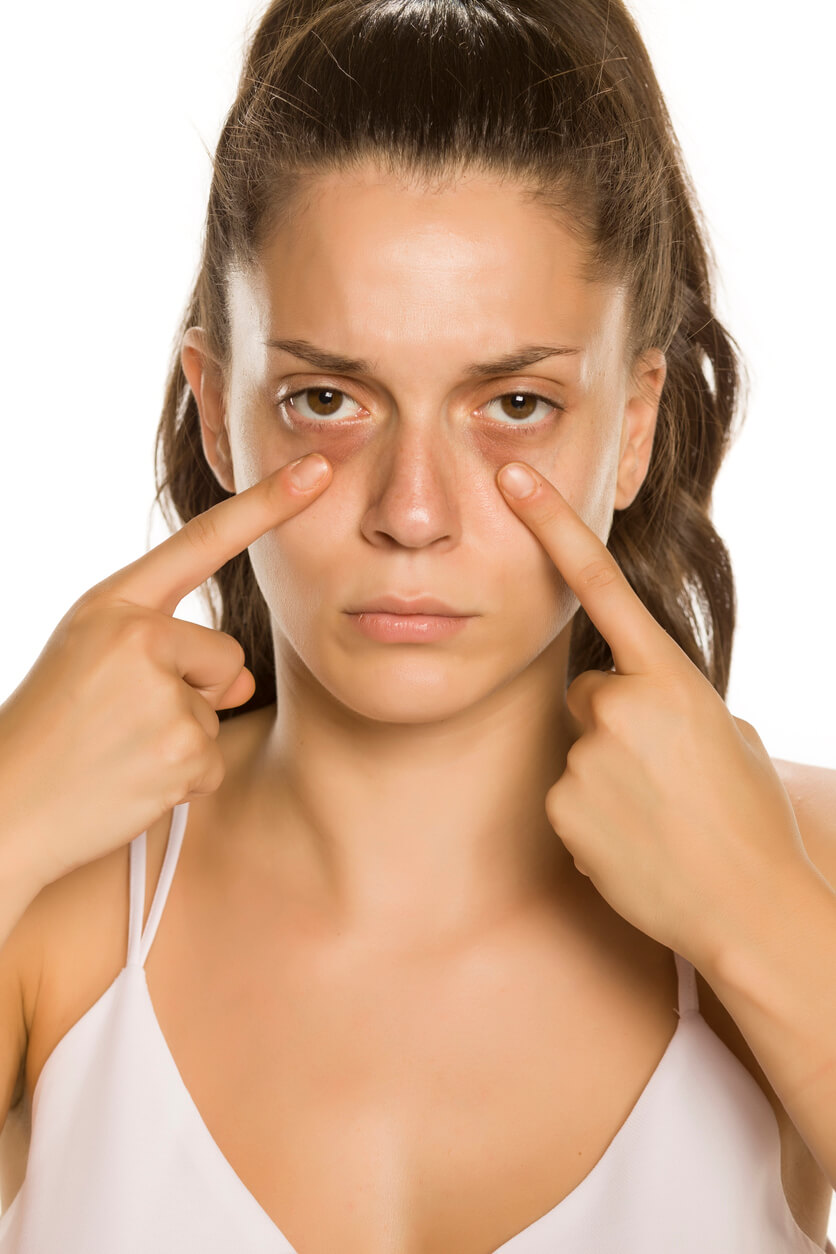
Removing under-eye bags: understanding the causes, weighing treatment options
If you would like to have under-eye bags removed, you should first distinguish between persistent tissue bulges, fluctuating swelling and dark circles: this determines whether treatment without surgery or lower eyelid surgery may be appropriate.
During my consultation on Kurfürstendamm in Berlin, we examine your eye area and discuss what changes you would like.
What is meant by under-eye bags
In a cosmetic context, we use the term under-eye bags to describe visible bulges beneath the eyes. These may be caused by protruding fatty tissue, loose skin or fluid retention. The colloquial term therefore describes an appearance, but not yet a specific cause.
The anatomical lacrimal sac, by contrast, is a small structure at the inner corner of the eye. It is part of the tear drainage system and collects tear fluid, which then drains into the nose. It is not the tissue bulge that becomes visible beneath the eye in cosmetic under-eye bags.
When we remove or correct cosmetic under-eye bags, this therefore does not involve removing the anatomical lacrimal sac or the lacrimal gland. Aesthetic lower eyelid surgery addresses the skin and, where appropriate, the underlying tissue. Disorders of the tear drainage system require a different medical assessment.
This distinction also helps when looking for a suitable treatment: findings that look similar externally can have different causes. What matters is not just how clearly visible a bulge is, but which tissue is involved and whether there are accompanying symptoms.
Why the lower eyelid region changes
The skin around the eyes is particularly thin. With increasing age, the skin and connective tissue can lose firmness, allowing the underlying fatty tissue to protrude more visibly. This does not necessarily mean that new fat pads have formed: changes in the support of existing tissue also play a role.
In some cases, genetics can also play a role. If similar changes occur in your family, this can help with the assessment. However, this establishes neither a fixed age for treatment nor a need for surgery.
UV exposure and smoking can further influence skin ageing. Lack of sleep or fluid retention can also alter the appearance. However, a persistent bulge cannot be attributed solely to a short night's sleep or particular dietary habits.
When a medical assessment is important
New, persistent or significantly changed swelling should be examined by a doctor. This also applies if you initially find the change bothersome only for cosmetic reasons. Not all swelling beneath the eyes is suitable for aesthetic treatment.
Swollen lower eyelids can occur in connection with allergies or other health-related causes, among other things. Long-standing swelling alone proves neither thyroid disease nor a kidney problem. Such possible connections are assessed on the basis of your symptoms and the examination, not a photograph alone.
If you develop new pain in the swollen eye area, you need a prompt medical assessment. If you experience visual disturbances, seek emergency ophthalmic care immediately. Do not wait for an aesthetic consultation appointment.
Bulging, swelling or dark circles?
Whether you notice under-eye bags or dark circles makes a difference to the choice of treatment. Equally important is whether the appearance changes over the course of the day or remains similar over a longer period. These observations help during the consultation, but do not replace an examination.
| Persistent bulging | Fluctuating swelling | Dark circles | |
|---|---|---|---|
| What you may notice | A long-standing bulge changes the contour of the lower eyelid. | For example, the eye area is more swollen in the morning and less swollen later. | The skin beneath the eyes appears darker. |
| What may be behind it | Protruding fatty tissue and reduced tissue firmness – not just fluid. | Fluid retention can shape the appearance. | Pigmentation or shadows at hollowed transitions between the lower eyelid and the cheek. |
| Important for the assessment | A cream can care for the skin, but cannot remove this type of tissue change. | The pattern over the course of the day alone neither reveals the exact cause nor rules out a medical condition. | Dark discolouration is not the same as excess tissue. |
Several changes can be present at the same time: a bulge may lie next to a deepened tear trough, a hollow at the transition to the cheek. We therefore look not just at one individual area, but at the interplay between contour, skin and adjacent tissue. If the darker appearance is the main concern, you can find further guidance on dark circles.
What is possible without surgery
It is understandable to ask about treating under-eye bags without surgery. What matters, however, is what you want to improve: relieving temporary swelling caused by fluid is different from correcting permanently protruding fatty tissue or excess skin.
Cool compresses can relieve temporary swelling. A washcloth dampened with cool water is a simple option for this. However, this measure does not change any permanent excess tissue and is no substitute for an examination if symptoms are new or persistent.
Cucumber slices or tea bags, on the other hand, are not a method for removing protruding tissue.
Eye creams can care for dry skin; light-reflecting products can visually conceal shadows.
Getting enough sleep and keeping the head slightly elevated can help some people reduce morning swelling. This does not mean they have a reliable effect on every form of under-eye bags. If the bulge remains, it does not mean that you have done anything wrong with your skincare.
Lymphatic drainage, massage and microneedling: what are the limitations?
Microneedling refers to a treatment of the skin using fine needles. Neither microneedling nor lymphatic drainage or massage can be generally recommended for removing permanent under-eye bags. If swelling is unexplained, we first establish the cause.
Lower eyelid correction does not treat an unexplained underlying condition. If further examinations are needed first, this assessment takes priority. Afterwards, we can discuss whether you also wish to have aesthetic treatment and which options may be suitable.
Treating under-eye bags: options and limitations
Anyone wishing to treat under-eye bags should therefore not look for just a single trigger. We distinguish whether excess skin, protruding fatty tissue, fluctuating swelling or several factors are involved.
Only then can a suitable treatment approach be determined.
- If there is excess skin or permanently protruding tissue, a lower eyelid lift may be an option for surgically changing the contour under the eyes.
- Laser treatment is not a universal alternative to lower eyelid surgery either. Procedures to improve the skin's surface have a different aim from correcting protruding fat pads.
- Hyaluronic acid fillers add volume and may be an option for selected cases of sunken tear troughs. However, they do not remove protruding fat and are not a one-size-fits-all solution for swollen lower eyelids.
Is laser treatment an alternative?
Whether a laser is suitable at all for the change in your eye area must be assessed based on the specific findings; redness, irritation and pigmentation changes are also possible.
Can under-eye bags be removed with hyaluronic acid?
Dark circles under the eyes cannot always be improved with hyaluronic acid injections either. Filler treatment is also not the same as skincare.
In addition to swelling or bruising, hyaluronic acid injections can cause nodules and, rarely, vascular occlusions with tissue damage, potentially including loss of vision. The decision to have treatment without surgery must therefore be made just as carefully as the decision to undergo surgery.
When lower eyelid correction may be an option for removing under-eye bags
A lower eyelid lift is a surgical correction of excess skin and, where applicable, protruding tissue on the lower eyelid. It may be an option if the relevant tissue findings are present and you wish to change the contour under your eyes. Fluctuating swelling caused by fluid alone, on the other hand, is not a sufficient reason for this procedure.
What is meant by under-eye bag surgery?
The general medical term blepharoplasty refers to the surgical correction of soft tissue on the eyelids. Depending on the findings, tissue is reduced or redistributed. The term can refer to either upper or lower eyelid surgery and, on its own, does not indicate which method is suitable.
In an aesthetic context, what is often called under-eye bag surgery is therefore a lower eyelid correction. The aim is not to remove as much tissue as possible. Skin, fat distribution, lower eyelid position and stability must be considered together so that the planning suits the eye area.
How is lower eyelid correction planned?
Tell us whether you have any additional symptoms and what change you would like. Together with the examination findings, this helps us decide whether tissue can be reduced or redistributed and which correction suits your eye area. We weigh up the benefits and risks together.
Preparation, anaesthesia and aftercare
You can find detailed information on methods, preparation, anaesthesia and aftercare on our lower eyelid lift page.
What are the risks of lower eyelid correction?
Swelling and bruising can occur after lower eyelid correction. Other risks include postoperative bleeding, infections and impaired wound healing. Bleeding in the eye socket or an infection can also put vision at risk. We discuss these risks with you during your individual informed consent consultation.
If you experience severe pain, suddenly increasing swelling or visual disturbances after the procedure, seek emergency ophthalmic care immediately. Do not wait for your follow-up appointment.
How long does the result of surgical correction last?
A lower eyelid lift can change the contour under the eyes over the longer term, but it does not stop the natural ageing process. How the result develops depends on the initial findings and subsequent tissue changes. A fixed duration therefore cannot be promised.
Dark pigmentation, fine laughter lines or a tendency towards swelling caused by fluid may remain regardless of the correction.
If hooded eyelids also concern you
Hooded eyelids are overhanging areas of skin on the upper eyelid that can partially or more extensively conceal the natural eyelid crease. They affect a different area from under-eye bags on the lower eyelid. Both changes can occur together, but they must be examined and assessed separately.
An upper eyelid lift removes excess tissue on the upper eyelid. It may be an option if there is suitable excess skin, but it does not automatically also treat bulges under the eye. On our upper eyelid lift page, we explain the options and limitations of this correction.
Lowered eyebrows can also make the upper eyelids look heavier. An actually drooping upper eyelid, in turn, is not the same as excess skin above it. These differences are important because not every change in the upper eye area can be appropriately corrected with the same procedure.
If you would like to have both your hooded eyelids and under-eye bags treated, we examine both areas. A combination may be considered under suitable circumstances, but it is not standard for every eye area. The extent, recovery and risks must fit the overall plan.
Tell me what concerns you about your upper eyelids and what change you would like under your eyes. Our overview of eyelid lifts can help you gain an initial understanding of the different areas. Your personal goal remains more important than choosing a particular treatment name.
What is important before and after lower eyelid correction?
- Your observations: How long has the change been present, how has it progressed and are both sides affected? Also tell us about any accompanying symptoms.
- Previous treatments: Tell us which treatments have taken place and whether the change occurred afterwards.
- Your health: Allergies, known medical conditions and medications are important for medical assessment and planning.
- Your recovery: Plan for rest and follow-up appointments after the procedure. How recovery fits into your everyday life is also part of your decision.
- Returning to your routines: When you can resume work, exercise and your usual skincare routine depends on the extent of the correction and your healing progress.
About one to two weeks is an initial guideline for your return to work and social activities. Visible swelling may persist for longer, and complete healing continues beyond this time. How much time off is appropriate for you also depends on your work and the extent of the correction.
Removing under-eye bags: What determines the costs?
The costs depend on the chosen method, the areas treated and the extent of treatment. Before you make your decision, we discuss the expected total costs with you. A flat rate would not adequately reflect the differing clinical findings.
Your questions about under-eye bags
You do not need to be able to determine for yourself whether you have under-eye bags or dark circles before the consultation. Simply describe what you notice and what you would like to change. This also includes concerns about surgery or a wish not to start any treatment for the time being.
I am Andrea Caletti, a specialist in plastic, reconstructive and aesthetic surgery and a specialist in surgery. It is important to me that you can understand the recommendation and that there is room for your questions. You can find more about my professional qualifications in the legal notice.
To discuss your questions and have a personal examination, you can arrange an initial consultation using our contact form. I look forward to welcoming you at Kurfürstendamm 200, 10719 Berlin, at Vita Aesthetica. Together, we will clarify which change suits you.
Frequently asked questions about under-eye bags
Are cosmetic under-eye bags sacs filled with tear fluid?
No. Cosmetic under-eye bags are visible bulges beneath the eyes that may be characterised by protruding fatty tissue, loose skin or fluid retention. The anatomical lacrimal sac, by contrast, is located at the inner corner of the eye and is part of the tear drainage system. Neither this lacrimal sac nor the lacrimal gland is removed during an aesthetic lower eyelid lift.
Why are my lower eyelids more swollen in the morning?
Lower eyelids that are more swollen in the morning may be associated with fluid retention. Changes throughout the day help with assessment but do not prove a specific cause. Sleeping with the head slightly elevated may be helpful for some people. New, persistent or significantly changed swelling should be examined by a doctor; if there is also pain or visual disturbance, you need prompt medical attention.
What is the difference between under-eye bags and dark circles?
Under-eye bags primarily describe bulges or swelling beneath the eyes. Dark circles refer to a darker appearance, for example due to pigmentation or shadows in hollowed transitions to the cheek. Both changes can occur at the same time. A lower eyelid lift may therefore be an option when there is suitable excess tissue, but it does not automatically lighten dark skin.
Can home remedies remove permanent bulges?
Home remedies cannot remove permanently protruding fatty tissue or excess skin. Those who wish to improve under-eye bags without surgery may benefit from cool compresses, for example, for temporary swelling. Eye creams care for the skin but do not alter structural excess tissue. If swelling persists or changes significantly, a medical examination is advisable.
Is laser treatment suitable for every type of under-eye bag?
No. Depending on the procedure, laser treatment may target changes in the skin's surface. However, it is not a general method for correcting protruding fat pads or treating unexplained swelling caused by fluid. Whether under-eye bags can be appropriately treated without surgery depends on the clinical findings. Laser treatments can also cause redness, irritation and pigmentation changes.
When is surgery for under-eye bags, or a lower eyelid lift, an option?
Surgery for under-eye bags may be considered for persistent excess skin or protruding tissue on the lower eyelid. This means a lower eyelid lift, not removal of the anatomical lacrimal sac. Prerequisites are an examination, appropriate clinical findings and weighing your wishes against the possible risks. Fluctuating swelling caused by fluid alone does not justify surgical correction.
Are under-eye bags also treated during an upper eyelid lift?
An upper eyelid lift treats excess tissue on the upper eyelid and does not automatically correct under-eye bags on the lower eyelid. If both areas concern you, the upper and lower eyelids are examined separately. A combined correction can be discussed if the conditions are suitable. However, it is not a standard recommendation and must be considered individually in terms of extent, recovery and risks.
What determines the costs of treatment?
The costs of treating under-eye bags depend on the method, the areas treated and the extent of treatment. Surgical lower eyelid correction requires different planning from non-surgical treatment of another change in the eye area. During your personal consultation, we discuss the expected total costs with you before you decide.
How much recovery time should I plan for after lower eyelid correction?
Swelling and bruising may occur after lower eyelid correction. As an initial guideline for eyelid corrections, one to two weeks is often cited before resuming social activities or work; complete healing is not finished at that point. How much time off is appropriate for you and when you can resume exercise depends on the procedure and your healing progress.
How long does the result of surgical correction last?
The contour beneath your eyes may remain changed over the longer term. A fixed duration cannot be specified, as the skin and tissue continue to age after the procedure.