

Wrinkle treatment with Botox in Berlin
Do you feel full of energy, yet your eyes look tired or tense? With Botox treatment, we can soften expression lines – for a fresher, more relaxed expression that suits you.
It is lovely to have you here. Together, we will look at the change you would like and how we can take your expressive facial movements into account.
- Treatment duration
- Injections usually take a few minutes to around 20 minutes; additional time is needed for the consultation
- Anaesthesia
- General anaesthesia is usually not necessary
- Clinic stay
- Not required
- Ready for social activities
- Everyday activities can usually be resumed soon; redness or small bruises may be visible
- Fit for work
- For physically demanding work, we will discuss an appropriate break
- Exercise
- We will discuss with you when you can resume your training
- Injection sites
- Temporary swelling and tenderness may occur
- Costs
- Depend on the areas, amount of active ingredient and work involved; we will discuss your cost range in advance
- Aftercare
- Personal aftercare instructions and an agreed follow-up appointment
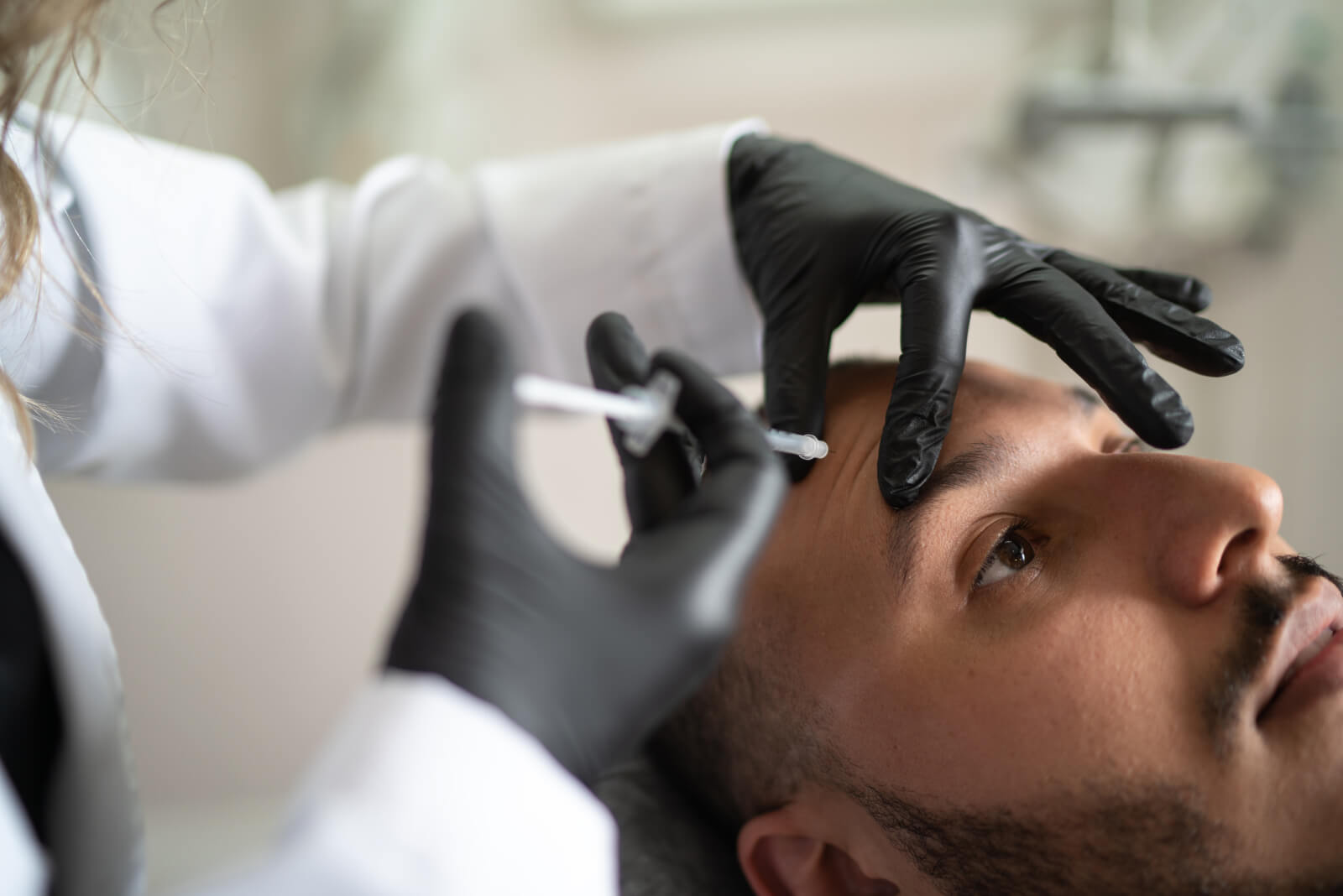
First, we listen to you and take time to examine your face at rest and in motion. We discuss the possible change and the risks, and plan the injection sites to suit your muscles. After disinfecting the skin, we inject small amounts into selected muscles using a very fine needle. You may feel brief pinpricks. If you are sensitive, ask us about the possibility of using a numbing cream. The injections usually take only a few minutes to around 20 minutes; we allow additional time for our discussion.
Redness, swelling, small bruises and headaches may occur. Neighbouring muscles may also be temporarily weakened, potentially resulting in a drooping eyelid, for example.
If you experience difficulty breathing or swallowing after an injection, seek emergency medical help immediately. Also have any unexpected muscle weakness assessed promptly by a doctor.
Do not massage the treated areas vigorously immediately afterwards. We will provide you with appropriate guidance on exercise, heat and skincare. If you experience any unusual symptoms, please contact us promptly rather than waiting until your follow-up appointment.

What is suitable for your wrinkles?
Botox or hyaluronic acid? What matters is how your wrinkles form. Botulinum toxin softens wrinkles caused by muscle movement but does not replace lost volume. Lines that are already etched into the skin may remain visible. Our overview of wrinkle treatment shows you the different options. For volume loss, wrinkle injections with hyaluronic acid fillers may be an option. Fillers have their own risks, such as inflammation, allergic reactions and vascular occlusions, which can damage tissue or vision. We will advise you on these separately.
How botulinum toxin works
Botulinum toxin is the active ingredient; Botox is a registered trade name often used in everyday language to refer to the treatment. In aesthetic medicine, we use small, precisely tailored amounts. The dosage depends on the strength of your muscles, the area being treated and the change you would like to see.
Botulinum toxin type A temporarily reduces signal transmission between nerve and muscle. The treated muscle contracts less strongly, so the skin above it folds less. This can make expression lines appear softer.
When you will see changes
Initial changes may become visible after one to a few days. The result then develops over several days to a few weeks. We agree with you on when to assess it together.
With botulinum toxin type A, the effect often lasts about three to four months, sometimes longer. The product, dosage, treated muscles and your individual response influence how it progresses.
As the effect wears off, the treated muscles move more strongly again and expression lines become more noticeable once more. You decide whether you would like a repeat treatment or a break. Having treatment does not commit you to regular follow-up appointments. Before any additional treatment, we wait for the result to develop and assess what interval is medically appropriate.
Forehead lines, frown lines and crow’s feet
Many wrinkles in the upper face develop through repeated muscle movements: when laughing, looking intently or raising the eyebrows. Such lines can often be softened effectively with botulinum toxin. Particularly deep-set wrinkles may remain visible afterwards. We tailor the areas we treat to your face and the medicinal product suitable for those areas.
Horizontal forehead lines develop when you raise your eyebrows. We aim to make these lines appear softer while paying attention to the position of your eyebrows: your eyes should look open and lively. This is why we consider the forehead and eye area together.
Frown lines can form between the eyebrows when you draw them together. They can make your expression look stern or tense, even though you feel quite different. Botulinum toxin reduces the muscle movement responsible and can soften these lines. You can find out more under Treating frown lines.
Smile lines at the sides of your eyes are part of your expression. If you would like to soften pronounced lines, we also look at how your eye area moves when you smile. The aim is a fresher look that continues to reflect your smile. Our page on crow’s feet presents possible treatments.
For nose and lip lines, we assess particularly carefully whether botulinum toxin is suitable. Especially around the mouth, movements such as speaking and drinking must be taken into account; use may be off-label.
Your expression is the focus
A natural appearance does not mean the same thing to everyone. Perhaps you would like to look less tense, but specifically want your smile lines to remain visible. Or you are interested in Botox for frown lines without having other areas of your face treated. Wishes like these belong at the beginning of the consultation.
I want to understand how you see yourself and what change would make you happy. To do this, I look at your muscle movements, proportions and the small differences between the two sides of your face. We tailor the dose and injection points to your face: pronounced frown lines require different planning from delicate lines around the eyes. Particularly for your first treatment, we discuss how subtle the change should be. Because botulinum toxin reduces movement in the treated muscles, agreeing on this degree of change together is important. Whether treatment makes sense depends on your wishes and the examination findings, not on a particular birthday.
From consultation to aftercare
Getting to know your wishes
Tell us what bothers you and what you particularly like about your face. There is also room here for your questions and concerns.
Discussing your health
We ask about medical conditions, medications and previous injections. You are welcome to bring any existing treatment records with you. Do not change or stop taking medications on your own for the treatment.
Planning together
After the examination, we explain the possible change and the risks. If you decide to proceed, we inject the active ingredient into selected muscles using a fine needle.
Going home with support
You will receive guidance for the period afterwards. We discuss the follow-up assessment and explain which symptoms mean you should contact us or seek immediate help.
Botulinum toxin for other concerns
Botulinum toxin may also be an option for medical complaints. You can find out more on our page about Botox for bruxism, or teeth grinding. Treating grinding or clenching differs from making an aesthetic change to the jaw contour through the large chewing muscle, the masseter.
You can find information about Botox for excessive sweating on a separate page. Migraine also requires a separate medical assessment: botulinum toxin is an option for certain forms of chronic migraine, not for headaches in general. You can also find the pages with further information at the bottom of this page.
Your consultation and the costs
The costs depend on the areas treated, your muscle activity, the amount of active ingredient required and the medical work involved. Before you make your decision, we discuss your cost range and explain how the consultation, treatment, follow-up assessment and any additional treatments are taken into account.
I am Andrea Caletti, a specialist in plastic, reconstructive and aesthetic surgery as well as a specialist in surgery. I look forward to meeting you at Vita Aesthetica at Kurfürstendamm 200. You can book your preferred appointment for our consultation directly online.
What you should know about risks
We discuss Botox risks and side effects openly with you. Redness, swelling, bruising and headaches are possible. If neighbouring muscles are also weakened, an eyelid or eyebrow may temporarily droop. Dry eyes, visual disturbances and allergic reactions can also occur. Very rarely, the effect spreads beyond the treated area and causes muscle weakness or difficulties breathing, speaking or swallowing.
If you experience difficulty breathing, speaking or swallowing after an injection, seek emergency medical help immediately. Call 112 if you experience shortness of breath or significant difficulty swallowing. Have unexpected muscle weakness or visual disturbances assessed by a doctor immediately.
Aesthetic treatment is not recommended during pregnancy or breastfeeding. Infections at the planned injection sites and certain nerve and muscle conditions may be reasons not to proceed with treatment. Please tell us about existing medical conditions, allergies and current symptoms so that we can carefully assess your suitability.
Frequently asked questions
What is Baby Botox?
Baby Botox usually refers to treatment with low-dose botulinum toxin. The aim is a subtle change while keeping facial expressions as animated as possible. Whether a small dose is sufficient depends on your muscles and the wrinkles being treated. We therefore plan the treatment to suit your face; even a low dose can have side effects. There is no specific starting age for this treatment.
Will my facial expressions be preserved after treatment?
The treated muscles temporarily move less strongly. We plan the treatment with the aim of preserving your individual expression. Tell us which movements and fine lines are particularly important to you.
When can the result be assessed?
The result develops over several days to a few weeks. The exact course depends, among other things, on the product and your response. We schedule the follow-up so that we can assess the effect once it has developed.
Which side effects and contraindications are important?
Possible side effects include swelling, bruising, headaches and unwanted muscle weakness, such as a drooping eyelid. Infections at the injection sites and certain nerve or muscle disorders may be reasons not to proceed with treatment. If you experience difficulty breathing, speaking or swallowing afterwards, you need immediate medical help.
What should I tell you about medications and previous treatments?
You are welcome to bring your medication list and records of previous injections. The product, timing, treated area and any symptoms are important. Please also inform us about allergies, medical conditions, pregnancy or breastfeeding. Please do not stop taking medication on your own.
What determines the cost of Botox treatment?
Primarily on the areas, the amount of active substance needed and the medical work involved. We explain your individual cost range before treatment, including the planned follow-up.
What happens if I do not repeat the treatment?
The effect gradually wears off. Your muscles become more active again, and expression lines reappear. You can then take your time to decide whether you would like another treatment. You do not have to follow a fixed treatment schedule; natural skin ageing continues regardless.