

Hyaluronic acid fillers in Berlin
Would you like a fresher appearance, softer wrinkles or a little more fullness in your cheeks and lips? With hyaluronic acid, we can replenish lost volume and gently accentuate contours.
We are glad you are here. At our practice in Berlin, we take time to understand your wishes – with an eye for the proportions that make your face distinctive.
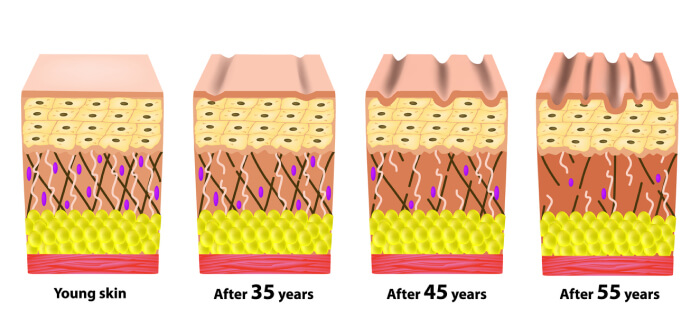
Over the years, cheeks can lose fullness, wrinkles can deepen and contours can appear softer. Fillers add targeted volume: for example, for a gentler transition between the cheek and mouth or a more refined lip contour. If your concerns primarily involve muscle movements or declining skin firmness, other procedures may be more suitable. You can find an overview under Wrinkle treatment.
Understanding hyaluronic acid and other fillers
Hyaluronic acid occurs naturally in our bodies, for example in the skin and joints. It binds water, contributing to moisture and volume in the tissue. For injections, it is produced biosynthetically and used as a gel. We select the properties of the gel to suit the facial area and your treatment goal.
Filler is the umbrella term for injectable filling materials; hyaluronic acid is one of them. Other materials contain substances such as calcium hydroxylapatite or poly-L-lactic acid. They differ in their effects, applications and risks. You can find out more on our pages about Radiesse and Sculptra. Here, the focus is on hyaluronic acid injections.



Wrinkles, lips and contours
Your treatment and the time afterwards
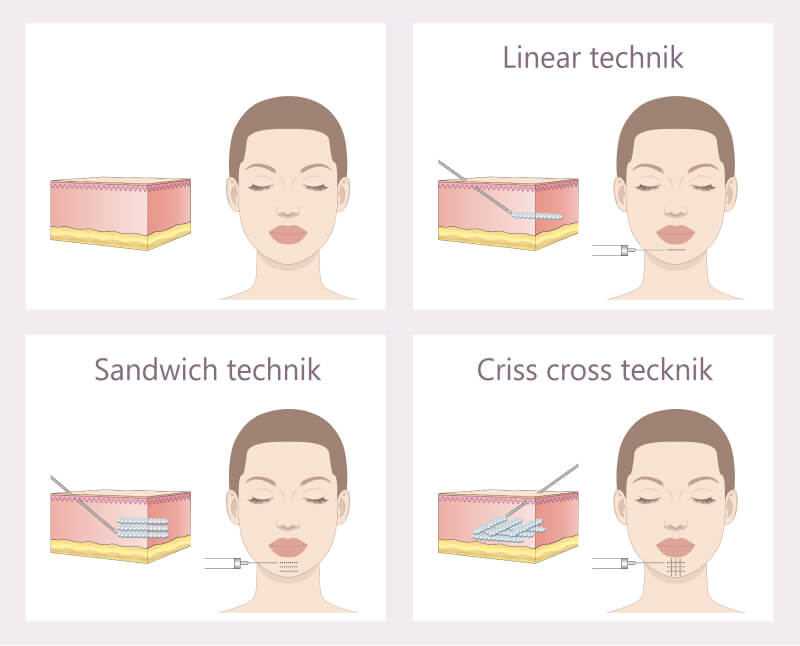
Before treatment, we discuss your wishes, pain relief and aftercare. After disinfecting the skin, we administer the selected hyaluronic acid gel through targeted injections. Depending on the area of the face, we use a fine needle or a cannula. You may feel a prick, pressure or a pulling sensation; a local anaesthetic can make the treatment more comfortable. The amount and placement depend on your anatomy and the jointly agreed goal.
You may see initial changes immediately after the injection. Swelling and the gel’s water-binding properties still affect the appearance at first. We discuss with you when the result can be assessed and when a follow-up is advisable.
How long does the change remain visible?
With hyaluronic acid fillers, the visible effect often lasts around six to twelve months. Depending on the product, facial region and tissue, it may remain visible for a shorter or longer time. The body gradually breaks down hyaluronic acid; material may still be present when the visible effect is already fading. Before a touch-up, we therefore reassess your tissue and previous treatments. What matters is how your face has changed and what you would like now.
You will receive appropriate aftercare instructions for the time after treatment. If you notice an area of concern, please contact us. Do not try to correct unevenness yourself through massage or other measures.
What suits your face
Hyaluronic acid can soften certain wrinkles that remain visible even when your facial muscles are relaxed. Often, the aim is also to restore lost cheek fullness or gently enhance the chin and jawline. This can create a fresher, more youthful overall appearance. To do this, we consider your whole face: more volume in one particular area is not automatically the right solution.
For nasolabial fold filler treatment, we therefore also consider the cheeks and surrounding tissue, not just the line between the nose and the corner of the mouth.
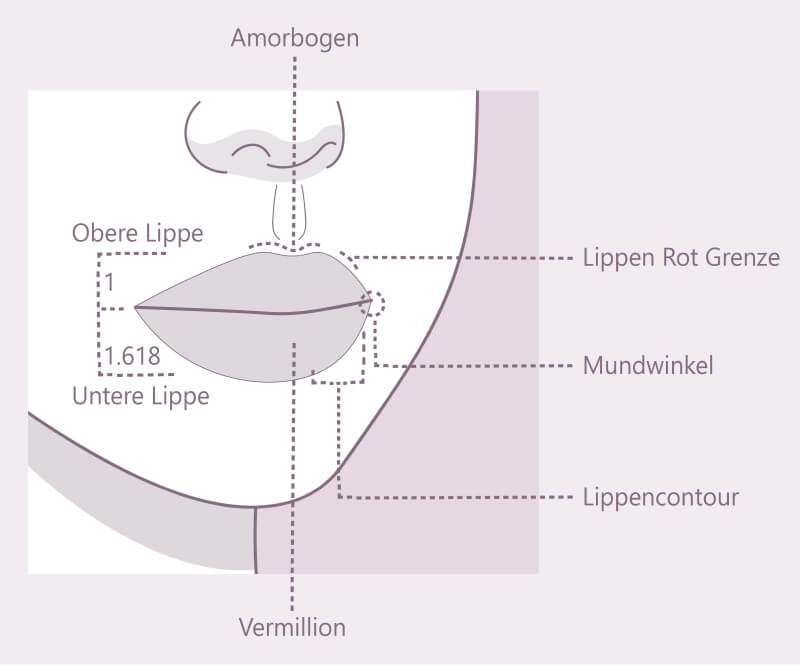
For lip filler treatment, we discuss shape, contour and volume separately. A more defined contour does not necessarily require significantly more fullness.
Wrinkles caused by muscle movements require a different approach: hyaluronic acid adds volume but does not reduce muscle activity.
Botulinum toxin temporarily relaxes selected muscles. For expression lines, a Botox treatment in Berlin may therefore be more appropriate. Sometimes the two procedures complement each other – we decide this together after the examination.



Planning hyaluronic acid treatment with care
We start with your wishes: what would you like to change, and what must stay as it is? We examine your facial shape, skin condition and proportions. Together, we set a realistic goal and discuss the procedure and risks. We also explain openly if less volume or a different procedure would suit your face better.
Have you had filler before? Bring any available records with you: the product, amount, timing and treated areas help us with planning. Please also tell us about any previous swelling, nodules, intolerances or corrections, as well as any current symptoms, medical conditions and medications.
If you would like a correction
Are you unhappy with a previous filler treatment? We examine the change and establish which material was used. This allows us to explain what is behind any unevenness and which correction is appropriate.
In a Hylase treatment, the enzyme hyaluronidase can break down hyaluronic acid, but not other filler materials. It also acts on the body's own hyaluronic acid and can cause side effects such as allergic reactions. We discuss with you beforehand how much correction is possible and what risks it involves. It is not always possible to fully restore the original state.
Knowing the risks and recognising warning signs
Swelling, redness and bruising can occur after filler treatment. Inflammation and allergic reactions are also possible. Later, material may migrate or inflammatory tissue nodules may develop – sometimes only years after treatment.
In rare cases, filler can block a blood vessel. This can cause tissue to die; if blood vessels in the eye area are affected, visual disturbances, including blindness, are possible. We discuss these serious risks with you before treatment.
If you experience visual disturbances after a filler injection, you need immediate medical help. Seek medical help or go to an emergency department immediately. Do not wait for a routine appointment or a reply via the contact form.
Also have any new numbness, significant pain, a feeling of pressure or other symptoms of illness assessed promptly by a doctor. If you experience sudden severe pain or unusual skin discolouration, you need immediate medical help. If our practice cannot be reached, contact an emergency medical facility.
Frequently asked questions
Are fillers and hyaluronic acid the same thing?
Not quite: hyaluronic acid is one of several types of filler. It binds water and is used as a gel for wrinkle and volume treatments. We tailor the choice of material to your concern and the facial area.
When is Botox more suitable than a filler?
If wrinkles are mainly caused by muscle movements, botulinum toxin may be more suitable. It temporarily reduces muscle activity. Fillers, on the other hand, add volume. We determine which approach is appropriate during the examination.
How is it decided whether filler treatment is suitable for my concern?
We combine your wishes with an examination of your facial shape, skin and proportions. We also take previous treatments into account. Our goal is a harmonious change – sometimes this also means advising against additional volume.
How long can a visible effect last?
The visible effect often lasts for around six to twelve months, but may last for a shorter or longer period depending on the product, area and tissue. The visible effect and the complete breakdown of the material do not follow the same course. Before a touch-up, we examine the treated areas again and assess with you whether additional volume is appropriate.
What are the risks of hyaluronic acid fillers?
Possible risks include swelling, bruising, inflammation and allergic reactions, as well as material migration or inflammatory nodules later on. Rare vascular occlusions can damage tissue and even lead to blindness. We discuss your personal risks beforehand.
What should I do if I experience visual disturbances after filler treatment?
Seek medical help or go to an emergency department immediately. Visual disturbances can indicate a vascular occlusion. Do not wait for a routine appointment or a reply via the contact form.
Can every filler be dissolved with Hylase?
No. Hylase breaks down hyaluronic acid, not other filler materials. The body's own hyaluronic acid may also be affected. Before a correction, we therefore establish which material was used, the possible outcome and the risks specific to this treatment.
What factors determine the cost of a hyaluronic acid treatment?
The area, product, amount of material and extent of treatment determine the price. After the examination, we explain the costs and which services are included.
Costs and consultation appointment on Kurfürstendamm
We will discuss your costs before treatment. They depend on the area, product, amount of material and work involved. After the examination, we will explain the plan to you – including the costs of consultation, follow-up appointments and any further treatments. This allows you to take your time to decide.